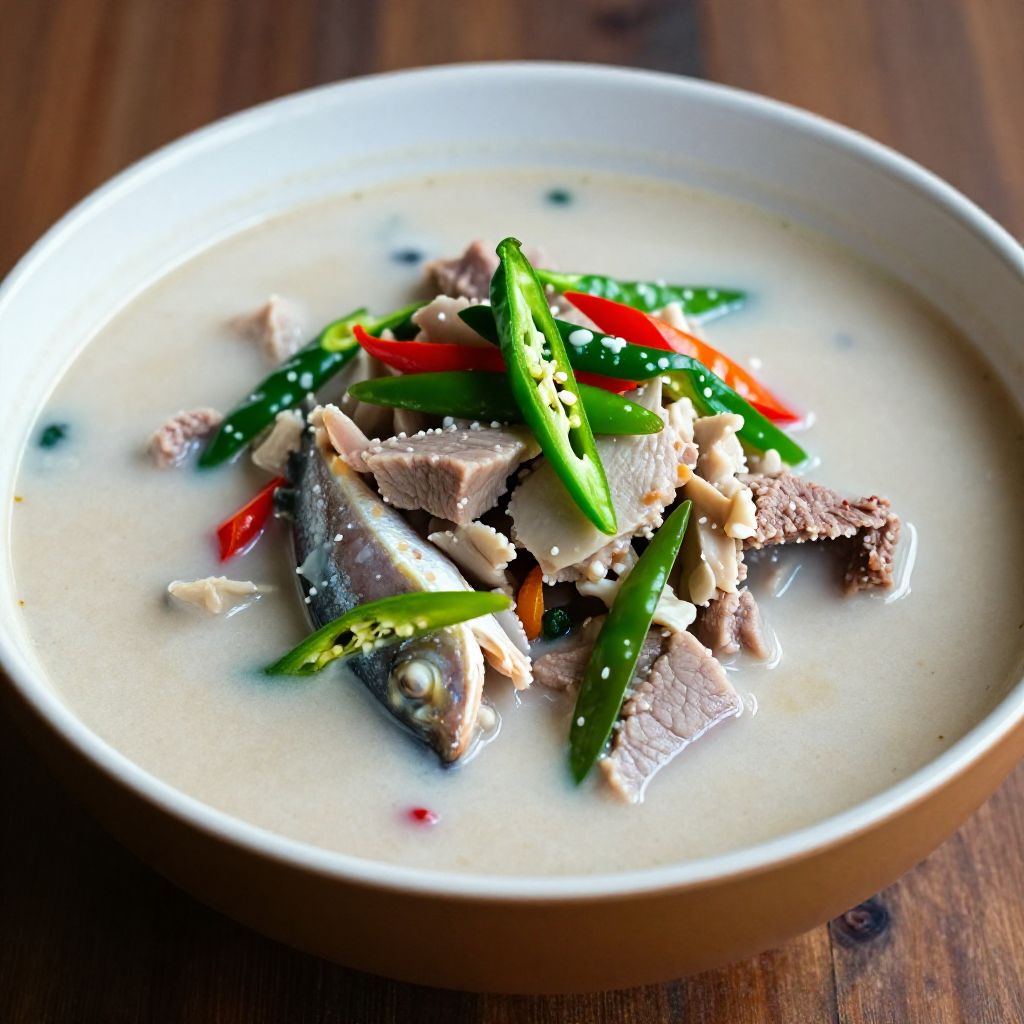
Sinanglaw
Sinanglaw is a fiery, coconut-based stew from the Bicol Region that packs a serious punch. Unlike the more well-known Bicol Express which uses pork, Sinanglaw stars fresh fish — typically bangus (milkfish) or galunggong (round scad) — simmered in a thick coconut milk broth loaded with siling labuyo (bird's eye chili), ginger, and aromatics. The name supposedly comes from the Bisayan word "sinalaw" meaning "to be dazzled or burned," referring to the intense heat. It's the kind of dish that makes your eyes water and your tongue tingle, but somehow you can't stop eating.
Instructions
Season the fish steaks with a pinch of salt and set aside. If you're using bangus, remove the scales and clean it well, then cut into thick steaks. Galunggong can be used whole or in sections.
In a large pot or clay pot, heat the cooking oil over medium heat. Sauté the crushed garlic and sliced ginger until they start to sizzle and smell amazing — the ginger is key to this dish.
Add the sliced onions and cook until translucent. Stir in the tomatoes and cook until they soften and start to break down, creating a base layer of flavor.
Pour in the coconut vinegar and let it simmer for a minute to cook off the sharp raw vinegar taste. Then add the fish sauce and mix well.
Gently add the thick coconut milk and stir slowly — don't boil it too vigorously or it might split. Add the sliced siling labuyo and the green papaya or string beans. Simmer for 5-7 minutes until the vegetables are tender.
Carefully add the fish steaks, laying them in the pot without stirring too much — you want the fish to stay intact. Cook for 5-8 minutes until the fish is opaque and flakes easily with a fork.
Finish with calamansi juice and fresh malunggay leaves if using. Ladle into deep bowls and serve immediately with plenty of white rice. Warning: this is hot — start with 5 chilies if you're not used to Bicolano spice levels.


Comments (0)
Leave a Comment