Pro Tips
Seafood cooks quickly — avoid overcooking. Look for opacity and flakiness as doneness indicators.
Cooking Tips
Seafood cooks quickly — remove it from heat the moment it turns opaque and flakes easily with a fork. Overcooking makes it tough and rubbery. Pat shellfish dry before adding to the pan so they sear rather than steam. A hot, quick cook preserves their natural sweetness.
Ingredient Substitutions
No coconut milk? For a richer alternative, blend canned coconut cream with water (1:1). For a lighter option, use evaporated milk with a splash of coconut extract. In a pinch, heavy cream or full-fat milk can replace coconut milk — the texture will be similar though the flavor profile changes. Short on time? A pressure cooker (Instant Pot) can reduce cooking time by roughly half for most braised and stewed Filipino dishes. Reduce liquid slightly since less evaporates.
Storage & Reheating
Store in an airtight container in the refrigerator for up to 3–4 days. The flavors often deepen overnight, making leftovers even more delicious. Seafood dishes are best consumed within 1–2 days. Reheat gently — microwave on low power or warm in a covered skillet over low heat to avoid overcooking. Do not refreeze thawed seafood dishes. Once reheated, consume immediately and do not re-refrigerate. Reheat on the stovetop over medium-low heat, adding a splash of water or broth if the sauce has thickened during storage. Microwave in 30-second bursts, stirring between each.
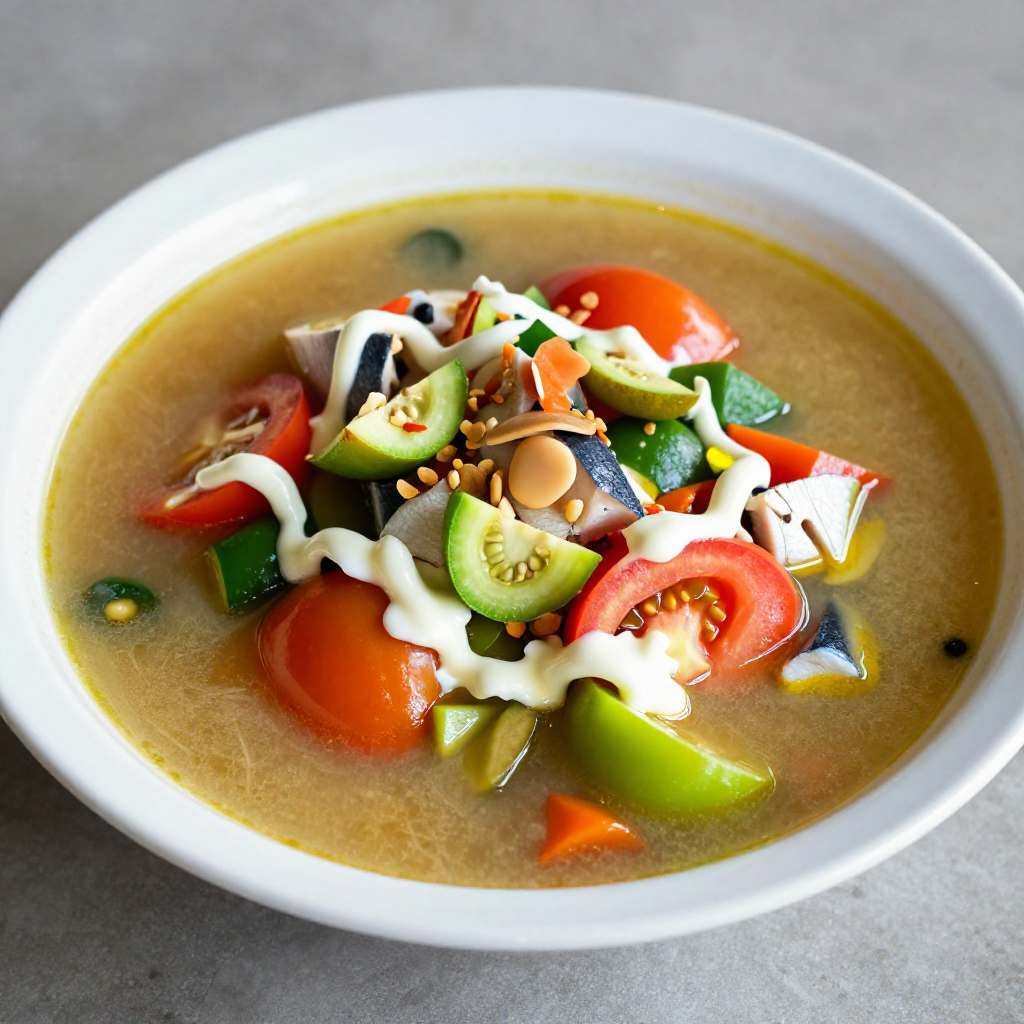
Tawu
A vibrant fish stew from Marinduque, where fresh catch meets a medley of garden vegetables in a tangy, vinegar-based broth. The dish is characterized by its bright, slightly sour profile from kamias (bilimbi) or tamarind, balanced by the natural sweetness of ripe tomatoes and the creaminess of coconut milk. It's a staple in Marinduque households and often prepared for fiestas and special family meals.
Instructions
- In a large caldero or pot, bring the water or fish stock to a rolling boil. Add the sliced onion, minced garlic, and quartered tomatoes. Let this base simmer for about 5 minutes until the tomatoes begin to soften and release their sweetness.
- Add the tamarind pulp or sliced kamias to the broth. This is what gives Tawu its signature tangy kick. Simmer for 2 to 3 minutes, then season with patis and salt. Taste and adjust — you want a bright sourness that wakes up the palate.
- Gently slide the whole fish into the broth. Do not stir at this point; just let the fish cook undisturbed for about 8 minutes on medium-low heat until the flesh flakes easily when tested with a fork.
- While the fish cooks, add the harder vegetables first — the green beans and string beans go in first, followed by the okra and eggplant about 3 minutes later. Layering the vegetables ensures everything reaches the right tenderness at the same time.
- Pour in the coconut milk and stir very gently to avoid breaking the fish. If using gabi leaves, toss them in now. Let the stew simmer for another 5 minutes until the vegetables are cooked through but still vibrant.
- Add the sliced siling haba and a generous grind of black pepper. The chili should just wilt into the stew — no need to cook it further. Serve immediately with plenty of steamed white rice.
Kitchen Tools We Recommend
Cook Tawu the easy way with the right tools. Shop our favorite kitchen essentials on Amazon — from reliable pots and pans to measuring tools that make Filipino cooking simpler.
🔥 Trending on Amazon right now — these products are selling fast. Check out what's climbing the charts.
As an Amazon Associate, I earn from qualifying purchases.
Pro Tips & Troubleshooting
Cooking Tips
Pat shellfish dry before adding to the pan so they sear rather than steam. A hot, quick cook preserves their natural sweetness.
Substitutions
In a pinch, heavy cream or full-fat milk can replace coconut milk — the texture will be similar though the flavor profile changes.
Short on time? A pressure cooker (Instant Pot) can reduce cooking time by roughly half for most braised and stewed Filipino dishes. Reduce liquid slightly since less evaporates.
Storage & Reheating
Seafood dishes are best consumed within 1–2 days. Reheat gently — microwave on low power or warm in a covered skillet over low heat to avoid overcooking.
Do not refreeze thawed seafood dishes. Once reheated, consume immediately and do not re-refrigerate.
Reheat on the stovetop over medium-low heat, adding a splash of water or broth if the sauce has thickened during storage. Microwave in 30-second bursts, stirring between each.
Comments (0)
Leave a comment