Pro Tips
Use only the freshest, sushi-grade milkfish for this raw dish. The curing time is critical — too short and the fish stays raw; too long and it becomes mushy. Coconut vinegar is non-negotiable for authentic flavor — regular cane vinegar won't deliver the right tropical tang. Keep the dish chilled and serve it quickly.
Cooking Tips
Seafood cooks quickly — remove it from heat the moment it turns opaque and flakes easily with a fork. Overcooking makes it tough and rubbery. Pat shellfish dry before adding to the pan so they sear rather than steam. A hot, quick cook preserves their natural sweetness.
Ingredient Substitutions
Out of cane vinegar? White vinegar, apple cider vinegar, or rice vinegar all work — each brings its own subtle character. Avoid balsamic (too sweet) or distilled white (too harsh). Lemon or calamansi juice can replace vinegar in most marinades and braises. Add a pinch of sugar to balance the acidity. Short on time? A pressure cooker (Instant Pot) can reduce cooking time by roughly half for most braised and stewed Filipino dishes. Reduce liquid slightly since less evaporates.
Storage & Reheating
Store in an airtight container in the refrigerator for up to 3–4 days. The flavors often deepen overnight, making leftovers even more delicious. Seafood dishes are best consumed within 1–2 days. Reheat gently — microwave on low power or warm in a covered skillet over low heat to avoid overcooking. Do not refreeze thawed seafood dishes. Once reheated, consume immediately and do not re-refrigerate. Reheat on the stovetop over medium-low heat, adding a splash of water or broth if the sauce has thickened during storage. Microwave in 30-second bursts, stirring between each.
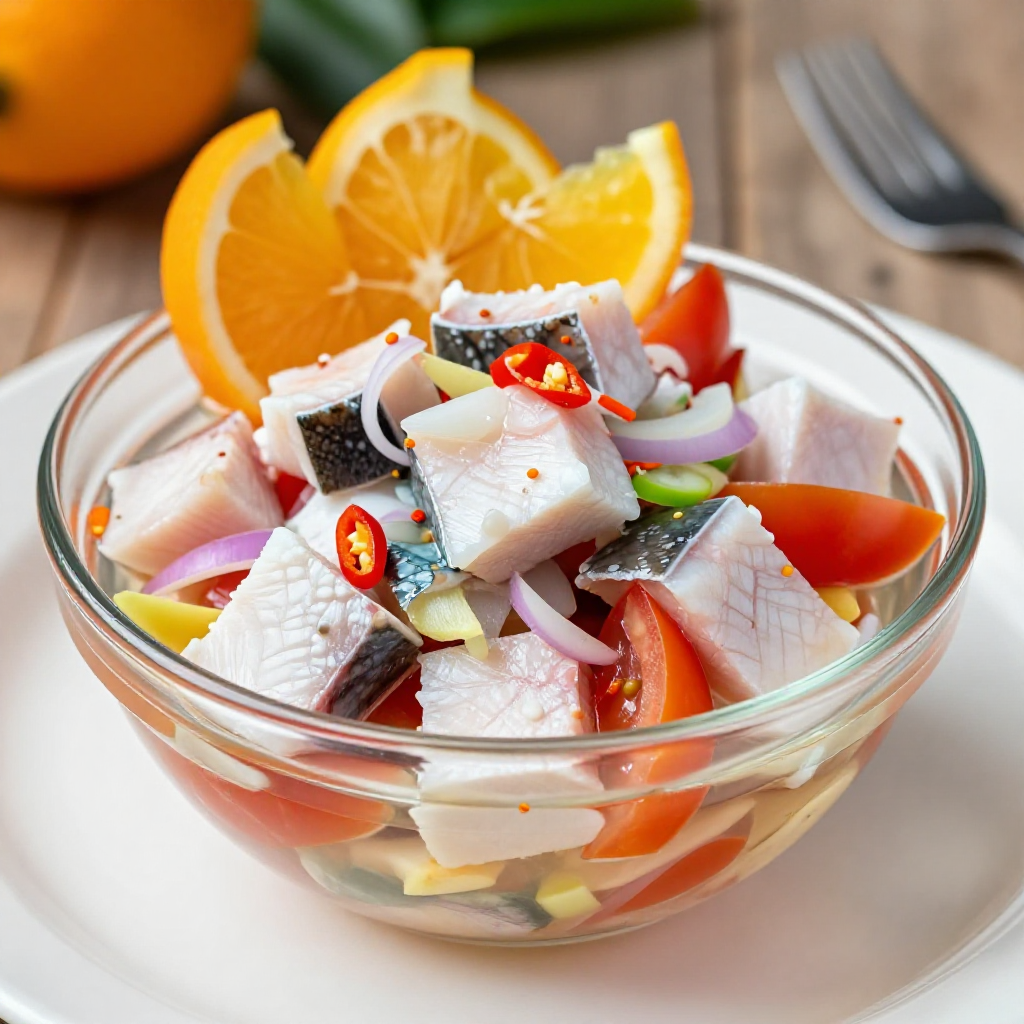
Sariwa na Kinilaw na Bangus
Sariwa na Kinilaw na Bangus is a fresh-style ceviche from the Visayan islands where milkfish is cured in coconut vinegar with ginger, chili, and tropical fruits. Unlike the cooked versions of kinilaw, this one relies entirely on the acidity of coconut vinegar to 'cook' the raw fish, resulting in a delicately flaky texture and bright, refreshing flavor. It's a staple at coastal celebrations and beachside gatherings across the Visayas.
Instructions
- Clean the milkfish thoroughly, removing all bones. Cut the flesh into uniform 1-inch cubes. Place in a large glass or ceramic bowl.
- In a separate container, mix the coconut vinegar, brown sugar, salt, and calamansi juice until the sugar dissolves completely. This is your curing base.
- Pour the vinegar mixture over the fish cubes, ensuring they are fully submerged. Cover and refrigerate for 20-25 minutes. The fish will turn opaque and firm as the acid 'cooks' it.
- While the fish cures, prepare the aromatics. Julienne the ginger thinly, slice the siling labuyo, and thinly slice the red onion.
- After 25 minutes, drain about half of the vinegar from the fish, reserving it in a small bowl.
- Add the ginger, chili, red onion, tomatoes, and green papaya to the fish. Toss gently to combine.
- Pour back some of the reserved vinegar to achieve your desired level of liquid — enough to coat the fish but not drown it.
- Garnish with chopped cilantro and toasted coconut strips. Serve immediately on chilled plates. This dish is best eaten fresh and should not be left out at room temperature for more than 30 minutes.
Kitchen Tools We Recommend
Cook Sariwa na Kinilaw na Bangus the easy way with the right tools. Shop our favorite kitchen essentials on Amazon — from reliable pots and pans to measuring tools that make Filipino cooking simpler.
🔥 Trending on Amazon right now — these products are selling fast. Check out what's climbing the charts.
As an Amazon Associate, I earn from qualifying purchases.
Pro Tips & Troubleshooting
Cooking Tips
Pat shellfish dry before adding to the pan so they sear rather than steam. A hot, quick cook preserves their natural sweetness.
Substitutions
Lemon or calamansi juice can replace vinegar in most marinades and braises. Add a pinch of sugar to balance the acidity.
Short on time? A pressure cooker (Instant Pot) can reduce cooking time by roughly half for most braised and stewed Filipino dishes. Reduce liquid slightly since less evaporates.
Storage & Reheating
Seafood dishes are best consumed within 1–2 days. Reheat gently — microwave on low power or warm in a covered skillet over low heat to avoid overcooking.
Do not refreeze thawed seafood dishes. Once reheated, consume immediately and do not re-refrigerate.
Reheat on the stovetop over medium-low heat, adding a splash of water or broth if the sauce has thickened during storage. Microwave in 30-second bursts, stirring between each.
Comments (0)
Leave a comment