Pro Tips
**Chef's Tips & Troubleshooting:**
- Don't open the oven door during the first half of baking — the temperature drop can cause cakes to collapse.
- Measure flour by spooning it into the cup, not scooping directly — scooping packs it down and adds up to 25% more flour.
- Preheat the oven fully before putting anything in — a cold oven gives dense, flat results.
Cooking Tips
Let the dessert cool completely before slicing or serving — many Filipino sweets set and develop their best texture as they rest. Use fresh coconut milk (gata) when available rather than canned. The natural sweetness and rich consistency make a noticeable difference. Have all your ingredients prepped and measured before you start cooking — quick dishes leave no time for chopping mid-recipe.
Ingredient Substitutions
No coconut milk? For a richer alternative, blend canned coconut cream with water (1:1). For a lighter option, use evaporated milk with a splash of coconut extract. In a pinch, heavy cream or full-fat milk can replace coconut milk — the texture will be similar though the flavor profile changes. Short on time? A pressure cooker (Instant Pot) can reduce cooking time by roughly half for most braised and stewed Filipino dishes. Reduce liquid slightly since less evaporates.
Storage & Reheating
Store in an airtight container in the refrigerator for up to 3–4 days. The flavors often deepen overnight, making leftovers even more delicious. Store desserts in a sealed container at room temperature for up to 2 days, or refrigerate for up to a week. Let chilled desserts come to room temperature before serving for the best texture and flavor. Reheat on the stovetop over medium-low heat, adding a splash of water or broth if the sauce has thickened during storage. Microwave in 30-second bursts, stirring between each.
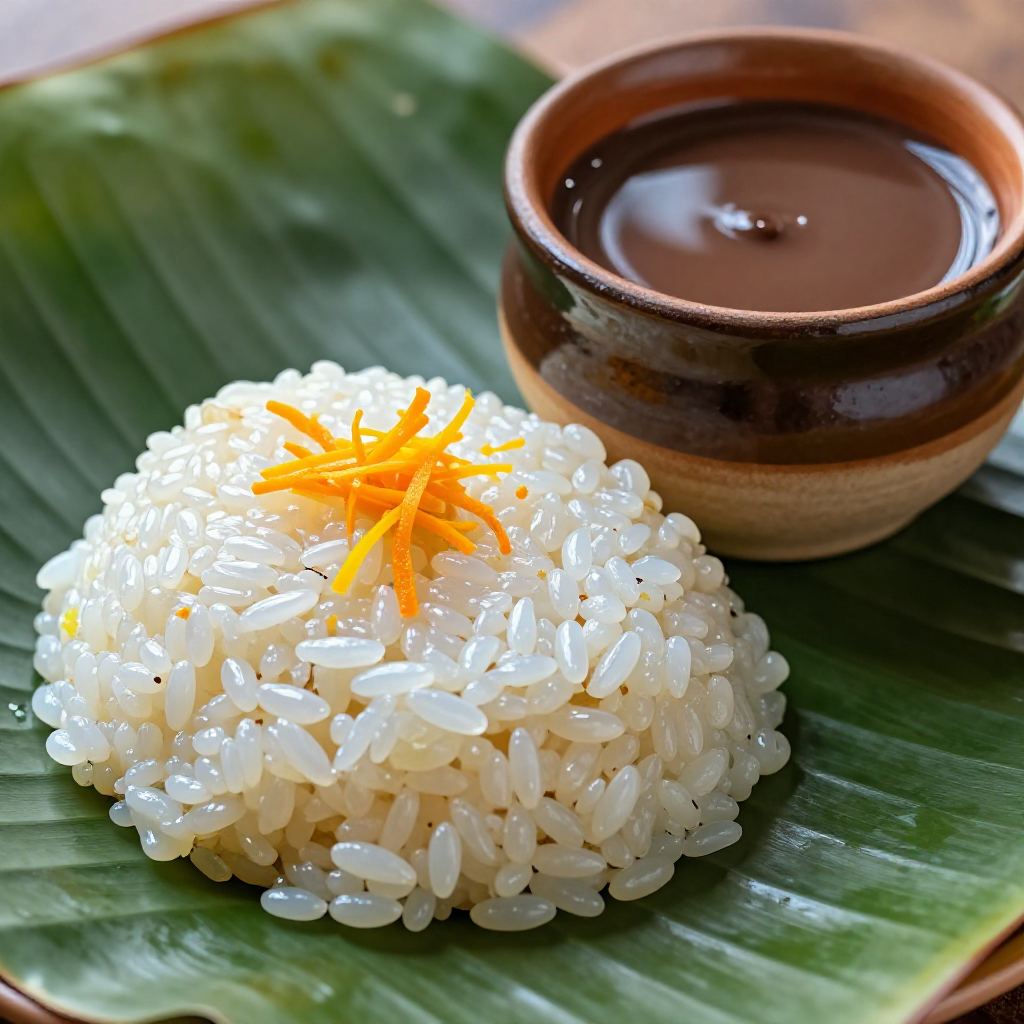
Puto Maya and Sikwate
Jump-start your day with Puto Maya and Sikwate! This Cebuana combination of sticky rice cake with juicy mangoes and hot chocolate is a delicious and filling treat for breakfast or any time of the day.
Instructions
- In a big bowl, place glutinous rice and add enough water to cover. Soak for about 1 hour and then drain. Under cold running water, rinse rice two to three times or until water runs clear. Drain it well.
- Fill the lower part of the steamer with water and bring up to a rolling boil on medium heat.
- Place soaked rice in a steamer basket, spreading the rice across the surface. Place the basket over the steamer, cover, and steam rice for about 30 to 40 minutes or until half-done.
- Meanwhile, squeeze the grated ginger using a cheesecloth to extract the juice. Discard fibers.
- Mix the coconut milk, the extracted ginger juice, sugar, and salt. Stir until sugar and salt are dissolved.
- After 40 minutes or when rice is half done, gently add coconut milk mixture. Stir until everything is mixed in.
- Continue to steam for about 20 to 30 minutes or until liquid is absorbed, and rice is fully cooked and tender but not mushy. Remove from heat.
- While still hot, pack rice into a small bowl to shape and invert on a plate. Serve with mangoes and sikwate. Alternatively, spoon puto maya in folded banana leaves, shape into a triangle, and wrap with the leaves.
- If cooking in a pot (or rice cooker), combine soaked rice, 1 thumb-size pounded ginger, coconut milk, sugar, and salt.
- On medium heat, heat until it comes to a boil uncovered for about 1 to 2 minutes, stirring until sugar and salt are dissolved.
- Lower heat, cover, and Keep cooking until liquid is absorbed and rice is fully cooked and tender but not mushy.
- In a saucepot on medium heat, bring water to a boil. Add the tablea and brown sugar.
- Cook, stirring now and then, for about 3 to 5 minutes or until the tablea and sugar are fully dissolved. Serve while hot.
Kitchen Tools We Recommend
Cook Puto Maya and Sikwate the easy way with the right tools. Shop our favorite kitchen essentials on Amazon — from reliable pots and pans to measuring tools that make Filipino cooking simpler.
🔥 Trending on Amazon right now — these products are selling fast. Check out what's climbing the charts.
As an Amazon Associate, I earn from qualifying purchases.
Pro Tips & Troubleshooting
- Don't open the oven door during the first half of baking — the temperature drop can cause cakes to collapse.
- Measure flour by spooning it into the cup, not scooping directly — scooping packs it down and adds up to 25% more flour.
- Preheat the oven fully before putting anything in — a cold oven gives dense, flat results.
Cooking Tips
Use fresh coconut milk (gata) when available rather than canned. The natural sweetness and rich consistency make a noticeable difference.
Have all your ingredients prepped and measured before you start cooking — quick dishes leave no time for chopping mid-recipe.
Substitutions
In a pinch, heavy cream or full-fat milk can replace coconut milk — the texture will be similar though the flavor profile changes.
Short on time? A pressure cooker (Instant Pot) can reduce cooking time by roughly half for most braised and stewed Filipino dishes. Reduce liquid slightly since less evaporates.
Storage & Reheating
Store desserts in a sealed container at room temperature for up to 2 days, or refrigerate for up to a week. Let chilled desserts come to room temperature before serving for the best texture and flavor.
Reheat on the stovetop over medium-low heat, adding a splash of water or broth if the sauce has thickened during storage. Microwave in 30-second bursts, stirring between each.

Comments (0)
Leave a comment