Pro Tips
**Chef's Tips & Troubleshooting:**
- Roasting the eggplant over an open flame adds a subtle smokiness that broiling can partially replicate. Peel the charred skin after roasting — the flesh underneath should be soft and creamy.
- Add the okra after the eggplant has simmered for a few minutes — okra releases mucilage (slime) which thickens the sauce, so timing controls the final texture.
- Bagoong alamang should be added early enough to bloom in the coconut cream, giving the whole dish a savory backbone without any fishy taste.
Cooking Tips
Blanch leafy vegetables in boiling salted water for 30–60 seconds, then plunge into ice water. This locks in their bright color and crisp texture. Add vegetables in stages — hard vegetables (carrots, potatoes) go in first, tender ones (leafy greens, beansprouts) at the very end. As prepared in Cebu City, this dish is best enjoyed with steamed white rice and a drizzle of fresh calamansi — the acidity cuts through the richness beautifully.
Ingredient Substitutions
Short on time? A pressure cooker (Instant Pot) can reduce cooking time by roughly half for most braised and stewed Filipino dishes. Reduce liquid slightly since less evaporates.
Storage & Reheating
Store in an airtight container in the refrigerator for up to 3–4 days. The flavors often deepen overnight, making leftovers even more delicious. Reheat on the stovetop over medium-low heat, adding a splash of water or broth if the sauce has thickened during storage. Microwave in 30-second bursts, stirring between each.
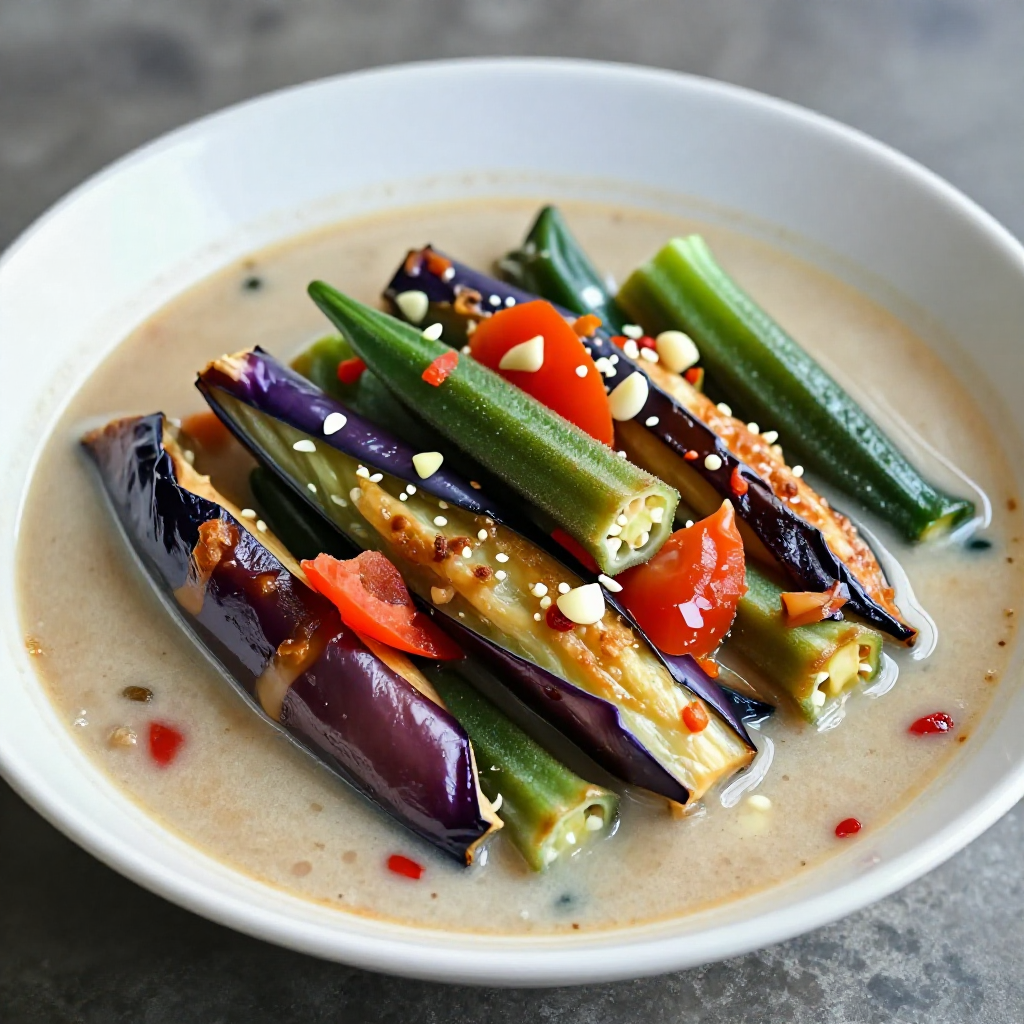
Pakulot na Talong
A homey Cebuano vegetable stew where roasted eggplant and fresh okra are simmered together in a light coconut milk sauce with tomatoes, siling haba, and garlic. 'Pakulot' is a Visayan preparation method where vegetables are gently wrapped in flavor — slow-cooked until everything is tender and the sauce has thickened slightly. It's a humble, everyday dish that showcases the Visayan love for coconut milk and fresh produce.
Instructions
- Roast the eggplant chunks over an open flame or under a broiler until the skin is charred and blistered. This adds a smoky depth that's signature to Visayan pakulot. Once charred, peel off the blackened skin and set aside. The flesh should be soft and smoky.
- In a kaldero or medium pan, sauté the garlic until golden. Add the sliced onion and cook for 2 minutes until translucent. Then add the shrimp paste and stir-fry for 30 seconds to release its savory aroma.
- Add the quartered tomatoes and cook for 2-3 minutes until they break down and create a light tomato base. This adds a gentle acidity that cuts through the richness of the coconut cream.
- Pour in the coconut cream and bring to a gentle simmer. Do not boil hard — just let it bubble softly. Add the fish sauce, sugar, and salt to season the broth.
- Add the roasted eggplant pieces and sliced siling haba. Simmer for 5 minutes so the eggplant absorbs the coconut-tomato sauce. Then add the okra and cook for another 5-7 minutes until the okra is tender but still holds its shape.
- Check the seasoning one more time. The sauce should be creamy and savory with a gentle sweetness. The eggplant should be silky and the okra tender. Serve warm with steamed rice — it's a comforting, wholesome Visayan comfort food.
Kitchen Tools We Recommend
Cook Pakulot na Talong the easy way with the right tools. Shop our favorite kitchen essentials on Amazon — from reliable pots and pans to measuring tools that make Filipino cooking simpler.
🔥 Trending on Amazon right now — these products are selling fast. Check out what's climbing the charts.
As an Amazon Associate, I earn from qualifying purchases.
Pro Tips & Troubleshooting
- Roasting the eggplant over an open flame adds a subtle smokiness that broiling can partially replicate. Peel the charred skin after roasting — the flesh underneath should be soft and creamy.
- Add the okra after the eggplant has simmered for a few minutes — okra releases mucilage (slime) which thickens the sauce, so timing controls the final texture.
- Bagoong alamang should be added early enough to bloom in the coconut cream, giving the whole dish a savory backbone without any fishy taste.
Cooking Tips
Add vegetables in stages — hard vegetables (carrots, potatoes) go in first, tender ones (leafy greens, beansprouts) at the very end.
As prepared in Cebu City, this dish is best enjoyed with steamed white rice and a drizzle of fresh calamansi — the acidity cuts through the richness beautifully.
Substitutions
Storage & Reheating
Reheat on the stovetop over medium-low heat, adding a splash of water or broth if the sauce has thickened during storage. Microwave in 30-second bursts, stirring between each.
Comments (0)
Leave a comment