Pro Tips
Always wear gloves when handling fresh taro leaves — the calcium oxalate crystals can cause intense itching. If using dried taro leaves (common in Batanes), soak them in warm water for 30 minutes first. The leaves must be thoroughly cooked to eliminate any itchiness and develop their creamy texture.
Cooking Tips
Blanch leafy vegetables in boiling salted water for 30–60 seconds, then plunge into ice water. This locks in their bright color and crisp texture. Add vegetables in stages — hard vegetables (carrots, potatoes) go in first, tender ones (leafy greens, beansprouts) at the very end.
Ingredient Substitutions
No coconut milk? For a richer alternative, blend canned coconut cream with water (1:1). For a lighter option, use evaporated milk with a splash of coconut extract. In a pinch, heavy cream or full-fat milk can replace coconut milk — the texture will be similar though the flavor profile changes. Short on time? A pressure cooker (Instant Pot) can reduce cooking time by roughly half for most braised and stewed Filipino dishes. Reduce liquid slightly since less evaporates.
Storage & Reheating
Store in an airtight container in the refrigerator for up to 3–4 days. The flavors often deepen overnight, making leftovers even more delicious. Reheat on the stovetop over medium-low heat, adding a splash of water or broth if the sauce has thickened during storage. Microwave in 30-second bursts, stirring between each.
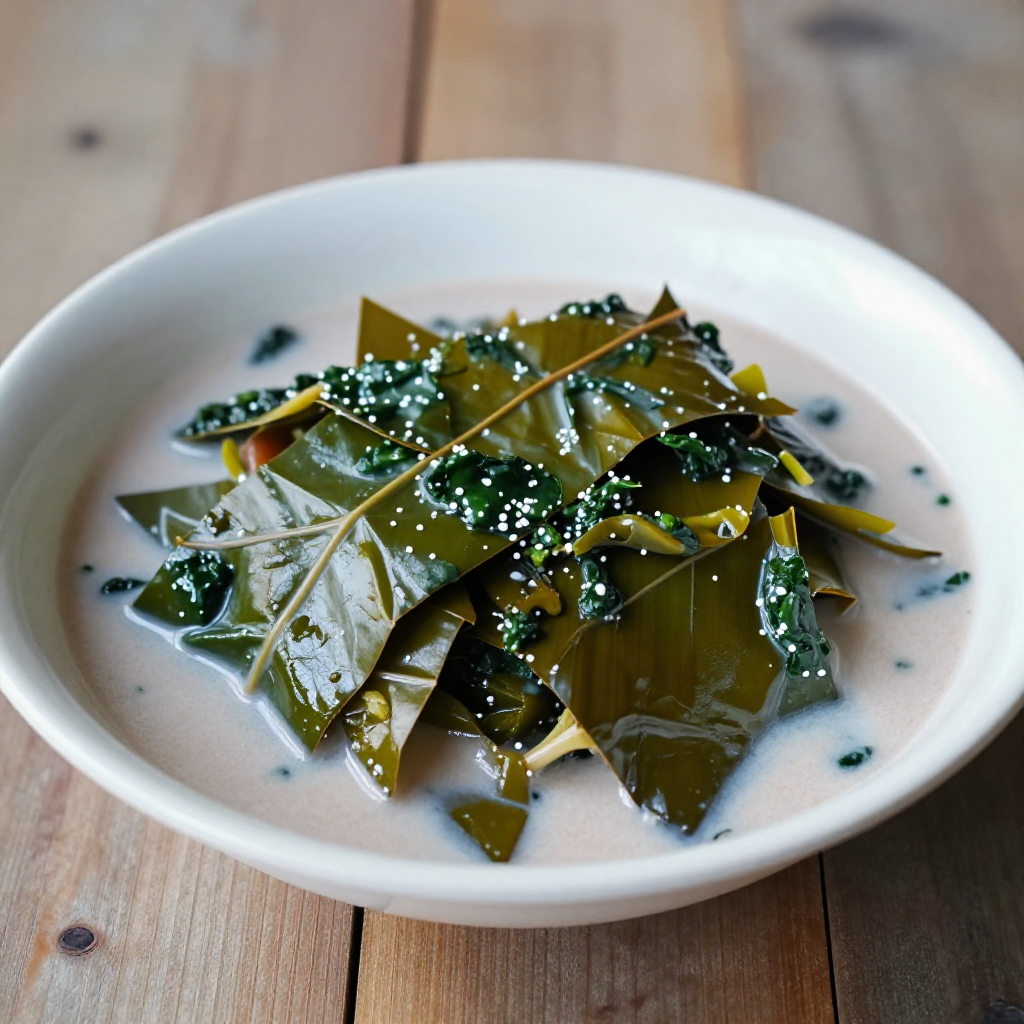
Misa-kayakaya
Misa-kayakaya is a treasured dish from the remote Batanes islands, where taro leaves are slow-cooked in coconut milk until they develop a velvety, almost spinach-like texture. The Ivatan people of Batanes have long relied on taro (gabi/kayakaya) as a staple crop, and this dish showcases it in its simplest, most flavorful form. The coconut milk adds richness that balances the earthy, slightly bitter notes of the taro leaves.
Instructions
- Wear gloves and prepare the taro leaves by removing the tough central stems. Wash the leaves thoroughly in several changes of water. Tear them into bite-sized pieces — about 2 to 3 inches across. If the leaves are very large and thick, you can blanch them briefly in boiling water for 2 minutes first to soften them.
- Heat the cooking oil in a pot over medium heat. Sauté the garlic and onions until soft and fragrant, about 2 minutes. Add the shrimp paste and stir for 30 seconds until it releases its aroma — this is the flavor base of the dish.
- Add the torn taro leaves to the pot and toss them with the aromatics so they're coated. Pour in the 150 ml of water and bring to a simmer. Cover and cook for 10 minutes until the leaves start wilting and turning a deep green color.
- Pour in the thin coconut milk (400 ml) and add the fish sauce and salt. Stir well and let it simmer uncovered for 15–20 minutes until the taro leaves are completely tender and have turned that characteristic dark, almost black-green color. The longer they cook, the creamier and more flavorful they become.
- Add the sliced red chili pepper in the last 5 minutes of cooking. Then stir in the thick coconut cream and simmer for another 3–5 minutes until the sauce is rich and slightly thickened.
- Taste and adjust seasoning — the dish should be creamy, savory, and mildly earthy with just a hint of chili heat. Serve with steamed rice and grilled fish or pork. In Batanes, this is often eaten with fresh corn (mais) as well.
Kitchen Tools We Recommend
Cook Misa-kayakaya the easy way with the right tools. Shop our favorite kitchen essentials on Amazon — from reliable pots and pans to measuring tools that make Filipino cooking simpler.
🔥 Trending on Amazon right now — these products are selling fast. Check out what's climbing the charts.
As an Amazon Associate, I earn from qualifying purchases.
Pro Tips & Troubleshooting
Cooking Tips
Add vegetables in stages — hard vegetables (carrots, potatoes) go in first, tender ones (leafy greens, beansprouts) at the very end.
Substitutions
In a pinch, heavy cream or full-fat milk can replace coconut milk — the texture will be similar though the flavor profile changes.
Short on time? A pressure cooker (Instant Pot) can reduce cooking time by roughly half for most braised and stewed Filipino dishes. Reduce liquid slightly since less evaporates.
Storage & Reheating
Reheat on the stovetop over medium-low heat, adding a splash of water or broth if the sauce has thickened during storage. Microwave in 30-second bursts, stirring between each.
Comments (0)
Leave a comment