Pro Tips
**Chef's Tips & Troubleshooting:**
- Simmer oxtail or pork trotters low and slow (1.5-2 hours) until fork-tender for the best texture.
- Blend peanut butter with a little warm water first to prevent lumps when adding to the stew.
- Roast the peanuty bagoong separately in a small pan before serving — it develops a smokier, richer flavor.
Cooking Tips
Seafood cooks quickly — remove it from heat the moment it turns opaque and flakes easily with a fork. Overcooking makes it tough and rubbery. Pat shellfish dry before adding to the pan so they sear rather than steam. A hot, quick cook preserves their natural sweetness.
Ingredient Substitutions
Short on time? A pressure cooker (Instant Pot) can reduce cooking time by roughly half for most braised and stewed Filipino dishes. Reduce liquid slightly since less evaporates.
Storage & Reheating
Store in an airtight container in the refrigerator for up to 3–4 days. The flavors often deepen overnight, making leftovers even more delicious. Seafood dishes are best consumed within 1–2 days. Reheat gently — microwave on low power or warm in a covered skillet over low heat to avoid overcooking. Do not refreeze thawed seafood dishes. Once reheated, consume immediately and do not re-refrigerate. Reheat on the stovetop over medium-low heat, adding a splash of water or broth if the sauce has thickened during storage. Microwave in 30-second bursts, stirring between each.
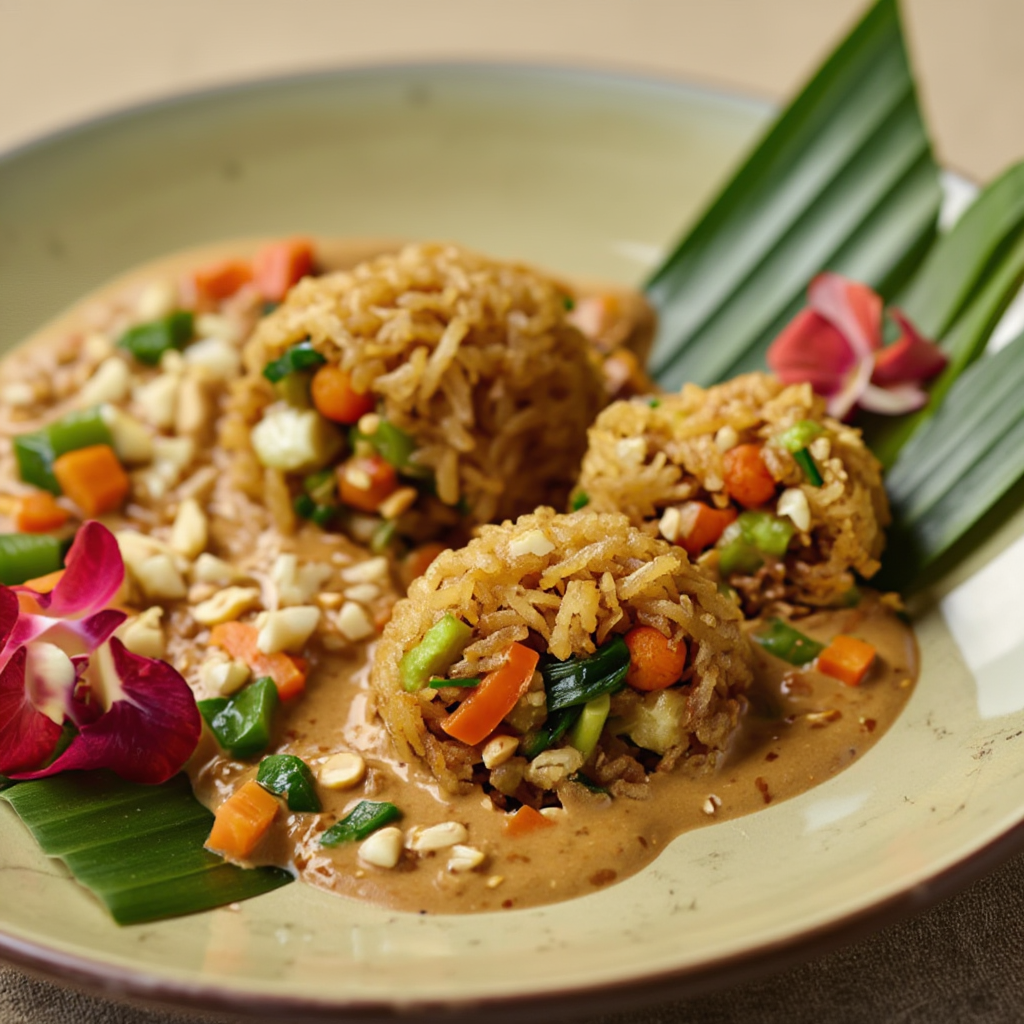
Lumpiang Hubad
Lumpiang Hubad with a colorful medley of vegetables and the best garlicky peanut sauce. It has all the delicious flavors you love in fresh lumpia, but without the wrapper!
Instructions
- Drain tofu from packing liquid. Pat with paper towels to absorb excess liquid. Cut into ½-inch cubes.
- Set a large pan on medium heat, heat about 2 tablespoons oil until very hot. Add tofu and cook, turning as needed, until it gets lightly browned. Remove from pan and drain on paper towels.
- Drop in the garlic, onion and sauté just until they soften.
- Add fish sauce and cook for about 1 minute.
- Add singkamas, carrots, and sweet potatoes.
- Add water and bring up to a rolling boil. Lower heat, cover, and Keep cooking until vegetables are tender yet crisp.
- Toss in tofu, garbanzo beans, and green beans, stirring to combine.
- Add salt and pepper to taste.
- Keep cooking for another 2 to 3 minutes or until garbanzo beans and tofu are heated through and green beans are tender yet crisp.
- Remove from the pan and drain excess liquid. You can use this liquid to make the sauce and just add water to total 2 ½ cups.
- In a saucepot on medium heat, combine water (or the reserved liquid from cooking the vegetables), soy sauce, brown sugar, and salt. Bring it to a boil. stirring them around, until sugar is dissolved.
- Mix in garlic and peanuts. Keep cooking for about 2 to 3 minutes.
- Mix cornstarch with ¼ cup cold water. Stir until the mixture is smooth. Slowly add corn starch mixture to soy sauce mixture, whisking vigorously to prevent lumps. Continue to cook, whisking regularly, until thickened.
- Mix in peanut butter and stir until dissolved.
- Spoon vegetable mixture on serving plates, pour peanut sauce on top and garnish with crushed peanuts and minced fresh garlic as desired.
- I like to use firm tofu for a satisfying vegetarian dish, but feel free to swap it with diced pork or minced shrimp.
- To boost flavor, the peanuts are cooked in an ungreased skillet until aromatic. Make sure to use unsalted.
- After cooking, drain the vegetable filling well and use the liquid in making the sauce for added depth of flavor. Just add more water to the liquid until it reaches 2 ½ cups, and adjust the salt amount.
Kitchen Tools We Recommend
Cook Lumpiang Hubad the easy way with the right tools. Shop our favorite kitchen essentials on Amazon — from reliable pots and pans to measuring tools that make Filipino cooking simpler.
🔥 Trending on Amazon right now — these products are selling fast. Check out what's climbing the charts.
As an Amazon Associate, I earn from qualifying purchases.
Pro Tips & Troubleshooting
- Simmer oxtail or pork trotters low and slow (1.5-2 hours) until fork-tender for the best texture.
- Blend peanut butter with a little warm water first to prevent lumps when adding to the stew.
- Roast the peanuty bagoong separately in a small pan before serving — it develops a smokier, richer flavor.
Cooking Tips
Pat shellfish dry before adding to the pan so they sear rather than steam. A hot, quick cook preserves their natural sweetness.
Substitutions
Storage & Reheating
Seafood dishes are best consumed within 1–2 days. Reheat gently — microwave on low power or warm in a covered skillet over low heat to avoid overcooking.
Do not refreeze thawed seafood dishes. Once reheated, consume immediately and do not re-refrigerate.
Reheat on the stovetop over medium-low heat, adding a splash of water or broth if the sauce has thickened during storage. Microwave in 30-second bursts, stirring between each.
Comments (0)
Leave a comment