Pro Tips
**Chef's Tips & Troubleshooting:**
- Toast the ground rice or peanuts before adding them to the stew for deeper flavor.
- Grind peanuts or peanut butter with a little warm broth first to prevent lumps in the sauce.
- Use a heavy-bottomed pot for even heat distribution when braising beef.
- For oxtail or beef shanks, the connective tissue needs prolonged simmering to become gelatinous and tender.
Cooking Tips
For the most tender results, cook low and slow — a gentle simmer (not a vigorous boil) breaks down connective tissue without drying out the meat. Taste and adjust seasoning toward the end of cooking. As liquids reduce, flavors concentrate, so what tastes balanced early may become too salty later. Check liquid levels halfway through cooking and add hot water or broth if needed. Long-cooked dishes can dry out or burn if left unattended. In true Kapampangan style — the food capital of the Philippines — don't be shy with the seasoning. Pampanga cooking is known for its bold, confident flavors.
Ingredient Substitutions
No fish sauce (patis)? Soy sauce or Worcestershire sauce are decent substitutes in cooked dishes. For a closer match, try anchovy paste dissolved in water. Beef alternatives: For stews, pork shoulder or oxtail provide similar richness. For steaks, try portobello mushrooms or cauliflower steaks for a vegetarian twist. Short on time? A pressure cooker (Instant Pot) can reduce cooking time by roughly half for most braised and stewed Filipino dishes. Reduce liquid slightly since less evaporates.
Storage & Reheating
Store in an airtight container in the refrigerator for up to 3–4 days. The flavors often deepen overnight, making leftovers even more delicious. Reheat on the stovetop over medium-low heat, adding a splash of water or broth if the sauce has thickened during storage. Microwave in 30-second bursts, stirring between each.
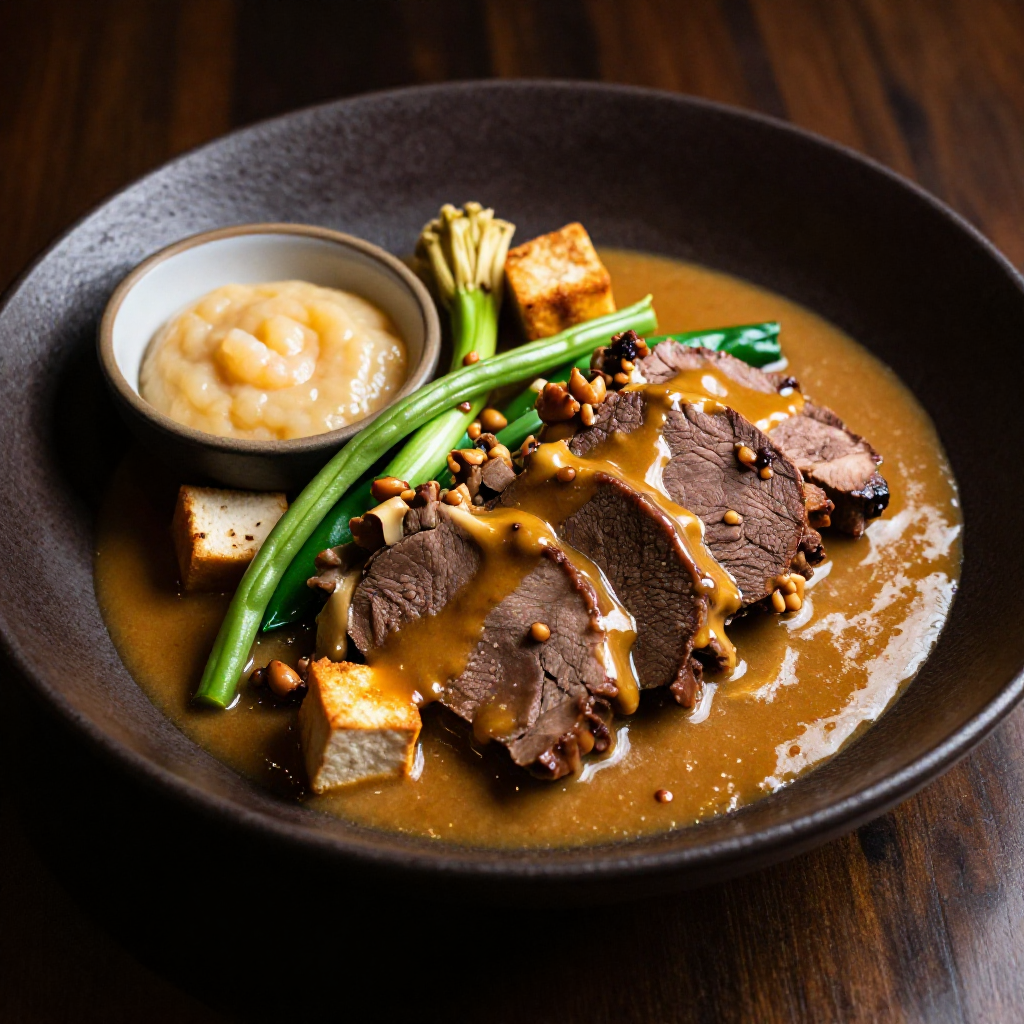
Lengua Kare-Kare
Tender ox tongue cooked in peanut and almond sauce and served with steamed bok choy, eggplant and string beans.
Instructions
- Add water in a pressure cooker. Add ox tongue. Pressure-cook for 45 minutes. Remove the tongue afterwards and let it cool down. Take the skin off the tongue and then slice into serving pieces. Set aside.
- Prepare the vegetables by steaming the eggplant and string beans for 10 minutes. Steam the bok choy for 5 minutes.
- Prepare the peanuts and almonds by roasting on a pan until the color starts to turn brown. Put the nuts in a food processor and blitz until the mixture turns into a paste-like consistency. Set aside.
- Heat annatto oil on a wok. Sauté garlic and onion.
- Once the onion softens, add the sliced lengua. Sauté for 2 minutes.
- Pour the beef broth into the wok. Cover and let boil. Continue boiling for 10 minutes in low heat setting.
- Add the peanut and almond paste. Stir until all ingredients are well blended. Continue cooking uncovered for 7 minutes. Season with salt.
- Transfer to a serving bowl and add the steamed vegetables. Serve with shrimp paste (bagoong alamang).
Kitchen Tools We Recommend
Cook Lengua Kare-Kare the easy way with the right tools. Shop our favorite kitchen essentials on Amazon — from reliable pots and pans to measuring tools that make Filipino cooking simpler.
🔥 Trending on Amazon right now — these products are selling fast. Check out what's climbing the charts.
As an Amazon Associate, I earn from qualifying purchases.
Pro Tips & Troubleshooting
- Toast the ground rice or peanuts before adding them to the stew for deeper flavor.
- Grind peanuts or peanut butter with a little warm broth first to prevent lumps in the sauce.
- Use a heavy-bottomed pot for even heat distribution when braising beef.
- For oxtail or beef shanks, the connective tissue needs prolonged simmering to become gelatinous and tender.
Cooking Tips
Taste and adjust seasoning toward the end of cooking. As liquids reduce, flavors concentrate, so what tastes balanced early may become too salty later.
Check liquid levels halfway through cooking and add hot water or broth if needed. Long-cooked dishes can dry out or burn if left unattended.
In true Kapampangan style — the food capital of the Philippines — don't be shy with the seasoning. Pampanga cooking is known for its bold, confident flavors.
Substitutions
Beef alternatives: For stews, pork shoulder or oxtail provide similar richness. For steaks, try portobello mushrooms or cauliflower steaks for a vegetarian twist.
Short on time? A pressure cooker (Instant Pot) can reduce cooking time by roughly half for most braised and stewed Filipino dishes. Reduce liquid slightly since less evaporates.
Storage & Reheating
Reheat on the stovetop over medium-low heat, adding a splash of water or broth if the sauce has thickened during storage. Microwave in 30-second bursts, stirring between each.
Comments (0)
Leave a comment