Pro Tips
The traditional method calls for washing and soaking glutinous rice, then pounding it into a fine flour using a stone mortar — a labor-intensive process that yields superior texture. If using store-bought glutinous rice flour, sift it well and let the batter rest for 30 minutes before wrapping. For the latik topping, use mature coconut meat for the deepest toasty flavor.
Cooking Tips
Let the dessert cool completely before slicing or serving — many Filipino sweets set and develop their best texture as they rest. Use fresh coconut milk (gata) when available rather than canned. The natural sweetness and rich consistency make a noticeable difference.
Ingredient Substitutions
No coconut milk? For a richer alternative, blend canned coconut cream with water (1:1). For a lighter option, use evaporated milk with a splash of coconut extract. In a pinch, heavy cream or full-fat milk can replace coconut milk — the texture will be similar though the flavor profile changes. Short on time? A pressure cooker (Instant Pot) can reduce cooking time by roughly half for most braised and stewed Filipino dishes. Reduce liquid slightly since less evaporates.
Storage & Reheating
Store in an airtight container in the refrigerator for up to 3–4 days. The flavors often deepen overnight, making leftovers even more delicious. Store desserts in a sealed container at room temperature for up to 2 days, or refrigerate for up to a week. Let chilled desserts come to room temperature before serving for the best texture and flavor. Reheat on the stovetop over medium-low heat, adding a splash of water or broth if the sauce has thickened during storage. Microwave in 30-second bursts, stirring between each.
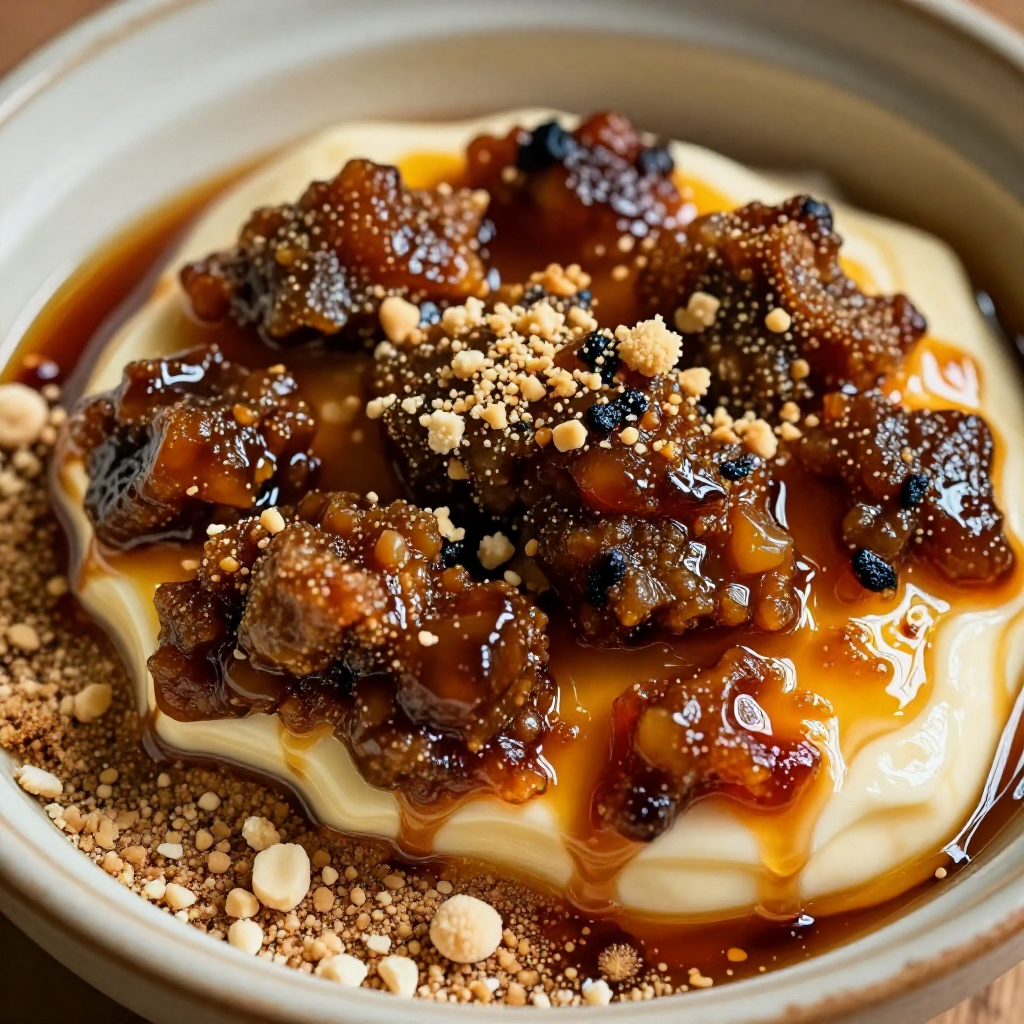
Inandila
Inandila is Kalinga's version of palitaw — a sweet, sticky rice cake that holds deep cultural meaning in the province. Traditionally prepared by the bride's family during wedding ceremonies, inandila is made from pounded glutinous rice mixed with sugar and coconut milk, wrapped in banana leaves, and boiled to a tender chew. It is served drizzled with ladek (Kalinga-style latik), a caramelized coconut-crumb syrup, and sometimes topped with crushed peanuts. The communal preparation of inandila is a cherished tradition that strengthens bonds between families.
Instructions
- Sift the glutinous rice flour into a large bowl. Add the white sugar and coconut milk, then gradually mix in water until you get a thick, pourable batter — similar to pancake batter but denser. Let the batter rest for 20 minutes.
- Prepare the banana leaves by trimming the stiff ribs and briefly passing them over a flame to soften. Cut into squares large enough to hold the batter.
- Prepare the ladek (latik): In a pan, combine the shredded coconut and hot water. Cook over medium heat, stirring, until the coconut browns and the liquid evaporates. Add sugar and cook until the mixture caramelizes into a sticky, golden-brown mass. Set aside.
- Ladle about 3 tablespoons of the inandila batter onto the center of each banana leaf square. Spread gently to form a flat circle, about 1 inch thick.
- Fold the banana leaves over the batter to form neat packets, sealing the edges. Place the packets in a pot with enough water to submerge them halfway.
- Bring to a boil, then reduce to a simmer. Cook for 25 to 30 minutes. The inandila is done when firm to the touch and no longer sticky.
- Remove from the pot and carefully unwrap each packet. Sprinkle generously with the prepared ladek (latik) and crushed peanuts if desired. Serve warm.
Kitchen Tools We Recommend
Cook Inandila the easy way with the right tools. Shop our favorite kitchen essentials on Amazon — from reliable pots and pans to measuring tools that make Filipino cooking simpler.
🔥 Trending on Amazon right now — these products are selling fast. Check out what's climbing the charts.
As an Amazon Associate, I earn from qualifying purchases.
Pro Tips & Troubleshooting
Cooking Tips
Use fresh coconut milk (gata) when available rather than canned. The natural sweetness and rich consistency make a noticeable difference.
Substitutions
In a pinch, heavy cream or full-fat milk can replace coconut milk — the texture will be similar though the flavor profile changes.
Short on time? A pressure cooker (Instant Pot) can reduce cooking time by roughly half for most braised and stewed Filipino dishes. Reduce liquid slightly since less evaporates.
Storage & Reheating
Store desserts in a sealed container at room temperature for up to 2 days, or refrigerate for up to a week. Let chilled desserts come to room temperature before serving for the best texture and flavor.
Reheat on the stovetop over medium-low heat, adding a splash of water or broth if the sauce has thickened during storage. Microwave in 30-second bursts, stirring between each.
Comments (0)
Leave a comment