Pro Tips
**Chef's Tips & Troubleshooting:**
- Simmer coconut milk gently — boiling it on high heat can cause it to separate and curdle.
- Stir coconut milk dishes occasionally to prevent a skin from forming on the surface.
- For fried fish, score the skin lightly so the heat penetrates evenly and prevents curling.
- Do not stir coconut milk dishes too vigorously once seafood is added — gentle folding prevents breaking.
Cooking Tips
For the most tender results, cook low and slow — a gentle simmer (not a vigorous boil) breaks down connective tissue without drying out the meat. Taste and adjust seasoning toward the end of cooking. As liquids reduce, flavors concentrate, so what tastes balanced early may become too salty later.
Ingredient Substitutions
No coconut milk? For a richer alternative, blend canned coconut cream with water (1:1). For a lighter option, use evaporated milk with a splash of coconut extract. In a pinch, heavy cream or full-fat milk can replace coconut milk — the texture will be similar though the flavor profile changes. Short on time? A pressure cooker (Instant Pot) can reduce cooking time by roughly half for most braised and stewed Filipino dishes. Reduce liquid slightly since less evaporates.
Storage & Reheating
Store in an airtight container in the refrigerator for up to 3–4 days. The flavors often deepen overnight, making leftovers even more delicious. Seafood dishes are best consumed within 1–2 days. Reheat gently — microwave on low power or warm in a covered skillet over low heat to avoid overcooking. Do not refreeze thawed seafood dishes. Once reheated, consume immediately and do not re-refrigerate. Reheat on the stovetop over medium-low heat, adding a splash of water or broth if the sauce has thickened during storage. Microwave in 30-second bursts, stirring between each.
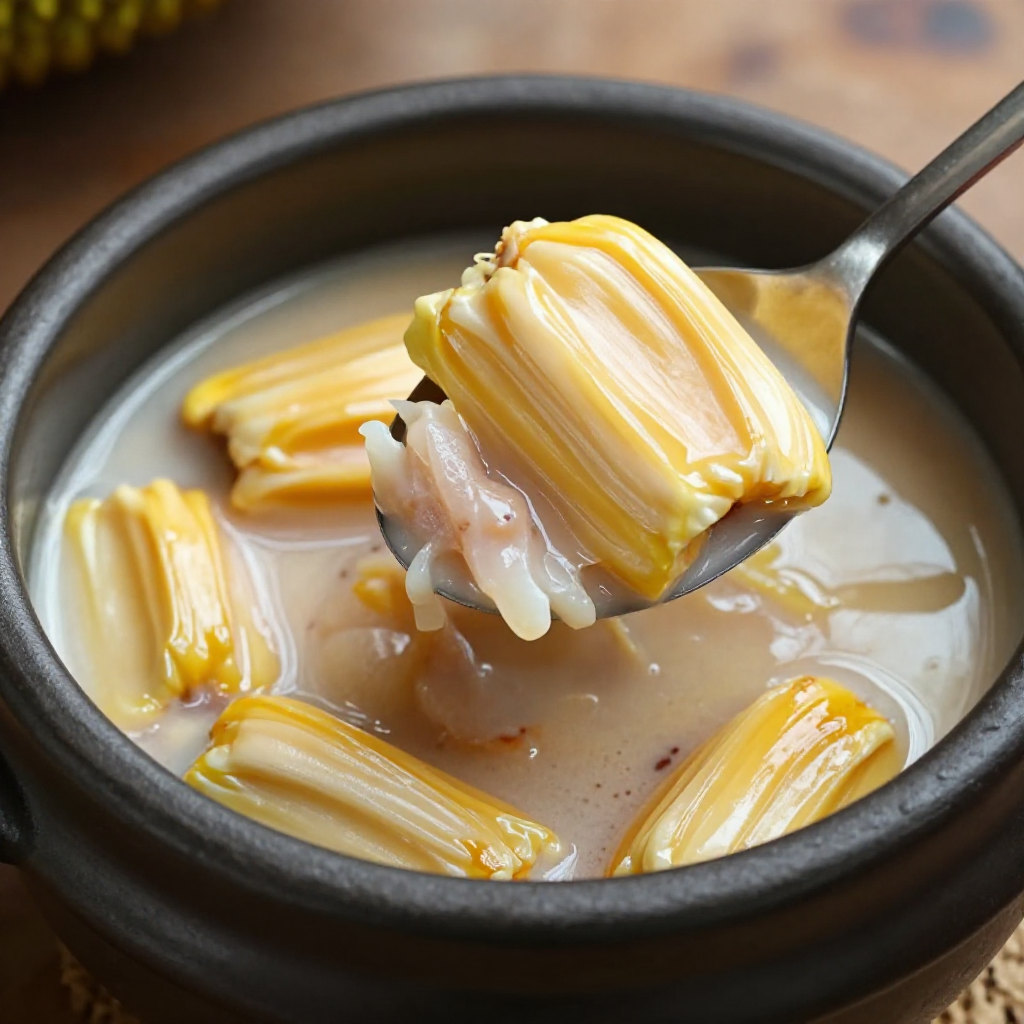
Ginataang Langka with Dilis
anchovies cooked in rich coconut milk — creamy, mild, and deeply satisfying. A staple Filipino cooking method from the Bicol region.
Instructions
- Heat a pan and then and pour-in the cooking oil.
- Pan-fry the dried anchovies for 2 minutes.
- Pour-in the coconut milk. Bring to a boil.
- Add the garlic and onions. Continue cooking for 4 minutes.
- Add-in the jack fruit and chilli. Simmer for 20 minutes while occasionally stirring.
- Put-in the fish sauce. Stir and continue simmering until dry.
- Serve.
Kitchen Tools We Recommend
Cook Ginataang Langka with Dilis the easy way with the right tools. Shop our favorite kitchen essentials on Amazon — from reliable pots and pans to measuring tools that make Filipino cooking simpler.
🔥 Trending on Amazon right now — these products are selling fast. Check out what's climbing the charts.
As an Amazon Associate, I earn from qualifying purchases.
Pro Tips & Troubleshooting
- Simmer coconut milk gently — boiling it on high heat can cause it to separate and curdle.
- Stir coconut milk dishes occasionally to prevent a skin from forming on the surface.
- For fried fish, score the skin lightly so the heat penetrates evenly and prevents curling.
- Do not stir coconut milk dishes too vigorously once seafood is added — gentle folding prevents breaking.
Cooking Tips
Taste and adjust seasoning toward the end of cooking. As liquids reduce, flavors concentrate, so what tastes balanced early may become too salty later.
Substitutions
In a pinch, heavy cream or full-fat milk can replace coconut milk — the texture will be similar though the flavor profile changes.
Short on time? A pressure cooker (Instant Pot) can reduce cooking time by roughly half for most braised and stewed Filipino dishes. Reduce liquid slightly since less evaporates.
Storage & Reheating
Seafood dishes are best consumed within 1–2 days. Reheat gently — microwave on low power or warm in a covered skillet over low heat to avoid overcooking.
Do not refreeze thawed seafood dishes. Once reheated, consume immediately and do not re-refrigerate.
Reheat on the stovetop over medium-low heat, adding a splash of water or broth if the sauce has thickened during storage. Microwave in 30-second bursts, stirring between each.
Comments (0)
Leave a comment