Pro Tips
**Chef's Tips & Troubleshooting:**
Grate the cassava finely — coarse shreds don't bind together when steamed. A box grater's fine side works well. Squeeze out excess moisture after grating so the parcels hold their shape during steaming.
Fold banana leaves into neat parcels, not loose wraps. Tight folds prevent the filling from leaking into the steamer water. Tuck the sides like a small gift box for the cleanest seal.
Biyaki is traditionally served warm from the steamer. The cassava should be tender but not mushy — about 20–25 minutes of steaming. Test one parcel before serving the rest.
Cooking Tips
Let the dessert cool completely before slicing or serving — many Filipino sweets set and develop their best texture as they rest. Use fresh coconut milk (gata) when available rather than canned. The natural sweetness and rich consistency make a noticeable difference.
Ingredient Substitutions
Short on time? A pressure cooker (Instant Pot) can reduce cooking time by roughly half for most braised and stewed Filipino dishes. Reduce liquid slightly since less evaporates.
Storage & Reheating
Store in an airtight container in the refrigerator for up to 3–4 days. The flavors often deepen overnight, making leftovers even more delicious. Store desserts in a sealed container at room temperature for up to 2 days, or refrigerate for up to a week. Let chilled desserts come to room temperature before serving for the best texture and flavor. Reheat on the stovetop over medium-low heat, adding a splash of water or broth if the sauce has thickened during storage. Microwave in 30-second bursts, stirring between each.
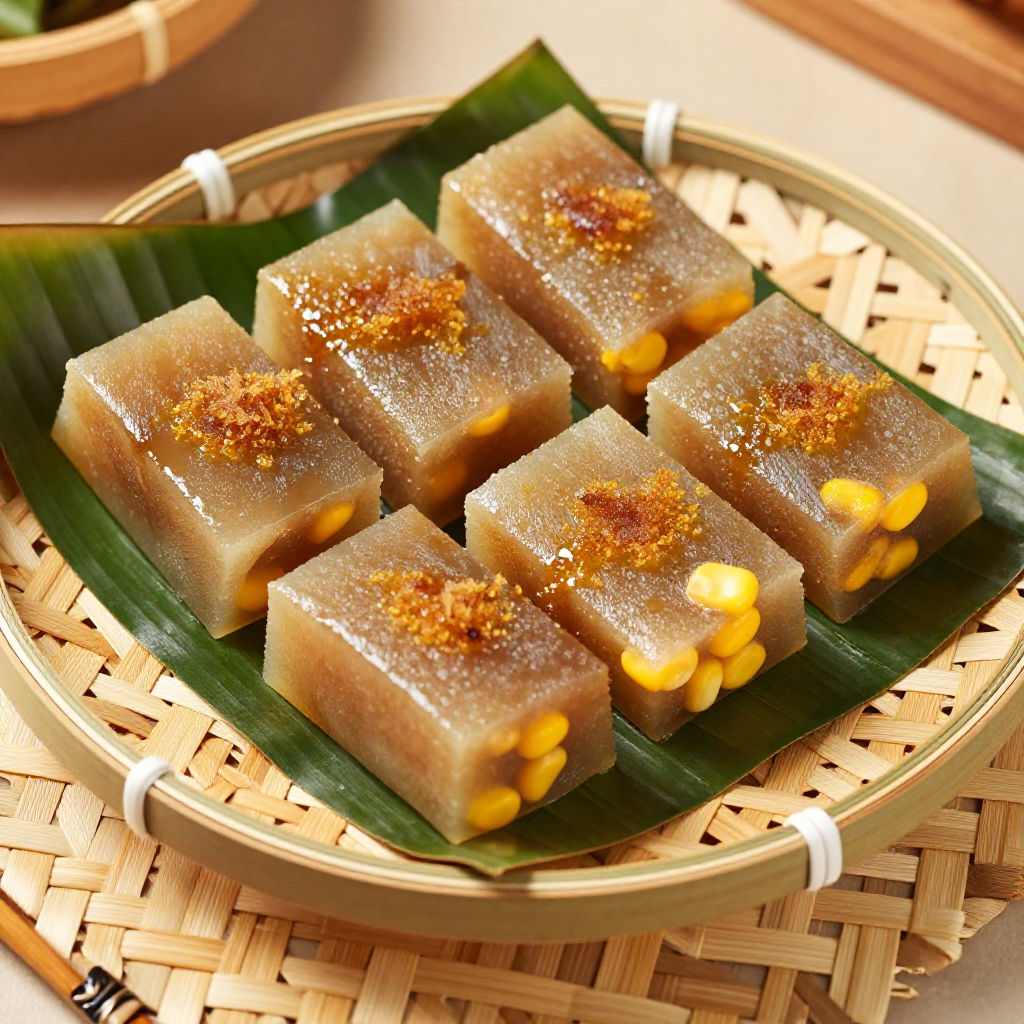
Biyaki
A sweet Maranao kakanin (rice cake) that pairs the earthy texture of grated cassava with the bright sweetness of fresh corn kernels, all bound together with rich coconut cream and brown sugar. Wrapped in banana leaf and steamed until firm, Biyaki is a handheld treat you can enjoy warm — the kind of snack that pairs perfectly with afternoon coffee or as a festive dessert after a meal.
Instructions
- In a large mixing bowl, combine the grated cassava, brown sugar, salt, corn kernels, and coconut cream. Mix thoroughly until everything is evenly distributed.
- Prepare the banana leaves by briefly passing them over a lit flame to soften them. Cut each leaf into 30 x 30 cm squares and wipe clean.
- Lay a banana leaf square flat on a clean surface. Spoon about 4 tablespoons of the cassava mixture onto the center of each leaf.
- Fold the banana leaf into a neat rectangular parcel, approximately 10 x 6 cm. Tuck in the sides to seal the mixture inside securely.
- Prepare a steamer with enough water to boil. Arrange the banana-leaf parcels in the steamer, leaving a little space between each.
- Steam over medium-high heat for 30 minutes, or until the Biyaki is firm and the cassava is fully cooked.
- Remove from the steamer and let cool for a few minutes before unwrapping and serving. Biyaki tastes wonderful warm, but can also be enjoyed at room temperature.
Kitchen Tools We Recommend
Cook Biyaki the easy way with the right tools. Shop our favorite kitchen essentials on Amazon — from reliable pots and pans to measuring tools that make Filipino cooking simpler.
🔥 Trending on Amazon right now — these products are selling fast. Check out what's climbing the charts.
As an Amazon Associate, I earn from qualifying purchases.
Pro Tips & Troubleshooting
Grate the cassava finely — coarse shreds don't bind together when steamed. A box grater's fine side works well. Squeeze out excess moisture after grating so the parcels hold their shape during steaming.
Fold banana leaves into neat parcels, not loose wraps. Tight folds prevent the filling from leaking into the steamer water. Tuck the sides like a small gift box for the cleanest seal.
Biyaki is traditionally served warm from the steamer. The cassava should be tender but not mushy — about 20–25 minutes of steaming. Test one parcel before serving the rest.
Cooking Tips
Use fresh coconut milk (gata) when available rather than canned. The natural sweetness and rich consistency make a noticeable difference.
Substitutions
Storage & Reheating
Store desserts in a sealed container at room temperature for up to 2 days, or refrigerate for up to a week. Let chilled desserts come to room temperature before serving for the best texture and flavor.
Reheat on the stovetop over medium-low heat, adding a splash of water or broth if the sauce has thickened during storage. Microwave in 30-second bursts, stirring between each.
Comments (0)
Leave a comment