Pro Tips
**Chef's Tips & Troubleshooting:**
- Let the oven fully preheat before putting the dish in for consistent cooking.
- Use a meat thermometer to check doneness rather than relying on cooking time alone.
- Let the dough rise in a warm, draft-free spot until it doubles in size for the fluffiest texture.
- For oyster sauce dishes, add it at the end of cooking to preserve its savory depth.
Cooking Tips
Seafood cooks quickly — remove it from heat the moment it turns opaque and flakes easily with a fork. Overcooking makes it tough and rubbery. Pat shellfish dry before adding to the pan so they sear rather than steam. A hot, quick cook preserves their natural sweetness. Have all your ingredients prepped and measured before you start cooking — quick dishes leave no time for chopping mid-recipe.
Ingredient Substitutions
Short on time? A pressure cooker (Instant Pot) can reduce cooking time by roughly half for most braised and stewed Filipino dishes. Reduce liquid slightly since less evaporates.
Storage & Reheating
Store in an airtight container in the refrigerator for up to 3–4 days. The flavors often deepen overnight, making leftovers even more delicious. Seafood dishes are best consumed within 1–2 days. Reheat gently — microwave on low power or warm in a covered skillet over low heat to avoid overcooking. Do not refreeze thawed seafood dishes. Once reheated, consume immediately and do not re-refrigerate. Reheat on the stovetop over medium-low heat, adding a splash of water or broth if the sauce has thickened during storage. Microwave in 30-second bursts, stirring between each.
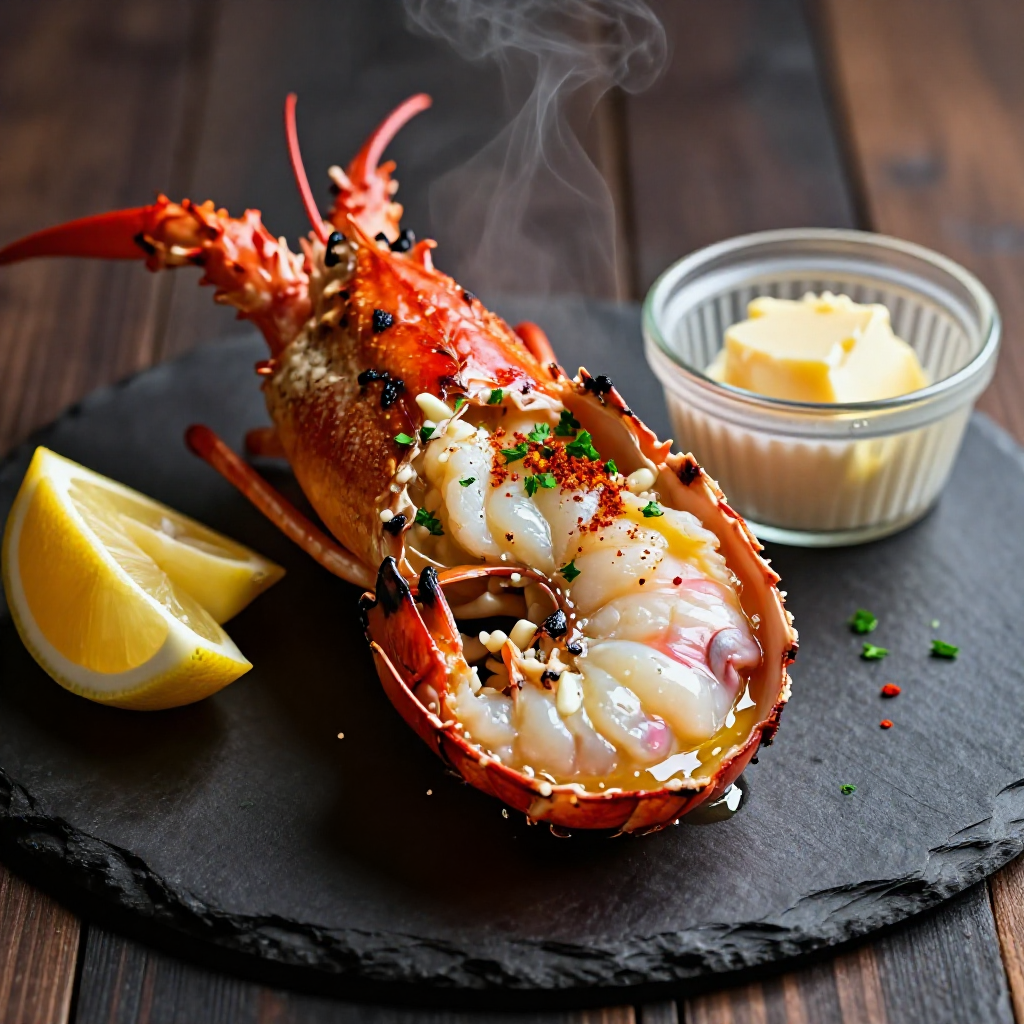
Baked Lobster Tails
Tender baked lobster tails brushed with a tangy Dijon butter marinade. The 30-minute marinating time allows the flavors to penetrate the meat for restaurant-worthy results. Serve with crusty bread to soak up every last drop of that delicious butter.
Instructions
- Preheat the oven to 400°F.
- Wash the lobster tails under cold running water. Use kitchen shears to cut through the top of each lobster tail lengthwise until you reach the tail tip. For large lobster tails, make an additional perpendicular cut from the center toward both ends to help the shell open more easily.
- Hold the lobster tail with both hands. Press your thumb against the middle of the abdomen while your other hand grips the opening you just cut. Pull it outward until the meat is visible. Slide your finger between the shell and the meat to loosen it, but keep the base attached. Carefully lift the meat out and rest it on top of the shell.
- Mix together the melted butter, minced parsley, lemon juice, Dijon mustard, and salt in a small bowl. Mix well until everything is incorporated.
- Arrange the lobster tails on a baking tray. Spoon a generous amount of marinade over each one and spread it evenly using a pastry brush. Reserve some marinade for later. Let the tails marinate for at least 30 minutes.
- Bake for 10 to 12 minutes or until the meat turns opaque and reaches an internal temperature of 140°F.
- Take off from the oven and brush with the remaining marinade. Arrange on a serving plate and serve immediately.
Kitchen Tools We Recommend
Cook Baked Lobster Tails the easy way with the right tools. Shop our favorite kitchen essentials on Amazon — from reliable pots and pans to measuring tools that make Filipino cooking simpler.
🔥 Trending on Amazon right now — these products are selling fast. Check out what's climbing the charts.
As an Amazon Associate, I earn from qualifying purchases.
Pro Tips & Troubleshooting
- Let the oven fully preheat before putting the dish in for consistent cooking.
- Use a meat thermometer to check doneness rather than relying on cooking time alone.
- Let the dough rise in a warm, draft-free spot until it doubles in size for the fluffiest texture.
- For oyster sauce dishes, add it at the end of cooking to preserve its savory depth.
Cooking Tips
Pat shellfish dry before adding to the pan so they sear rather than steam. A hot, quick cook preserves their natural sweetness.
Have all your ingredients prepped and measured before you start cooking — quick dishes leave no time for chopping mid-recipe.
Substitutions
Storage & Reheating
Seafood dishes are best consumed within 1–2 days. Reheat gently — microwave on low power or warm in a covered skillet over low heat to avoid overcooking.
Do not refreeze thawed seafood dishes. Once reheated, consume immediately and do not re-refrigerate.
Reheat on the stovetop over medium-low heat, adding a splash of water or broth if the sauce has thickened during storage. Microwave in 30-second bursts, stirring between each.
Comments (0)
Leave a comment