Pro Tips
**Chef's Tips & Troubleshooting:**
- Make sure the pan and oil are hot before adding ingredients for the best sear.
- Fry in batches to avoid overcrowding — lowering the temperature makes food greasy.
- Let the stew rest for 10 minutes after cooking — the flavors deepen noticeably as it sits.
- For fried fish, score the skin in shallow slits to help it cook evenly and prevent curling.
Cooking Tips
Pat the meat completely dry with paper towels before frying — moisture is the enemy of crispiness. Use a thermometer to maintain oil temperature at 350–375°F (175–190°C). If the oil is too cool, the food absorbs grease; too hot and it burns on the outside before cooking through. True to Ilocano tradition, this Dinengdeng with Fried Fish pairs wonderfully with a side of steamed rice and fresh bagoong (fermented shrimp paste) for an authentic regional experience.
Ingredient Substitutions
Short on time? A pressure cooker (Instant Pot) can reduce cooking time by roughly half for most braised and stewed Filipino dishes. Reduce liquid slightly since less evaporates.
Storage & Reheating
Store in an airtight container in the refrigerator for up to 3–4 days. The flavors often deepen overnight, making leftovers even more delicious. Crispy dishes are best enjoyed fresh — they lose their crunch when stored. If you must store leftovers, reheat in an air fryer or oven at 375°F (190°C) for 5–7 minutes to restore crispiness. Avoid microwaving crispy dishes — the steam makes the coating soggy. Use a toaster oven or stovetop skillet instead. Reheat on the stovetop over medium-low heat, adding a splash of water or broth if the sauce has thickened during storage. Microwave in 30-second bursts, stirring between each.
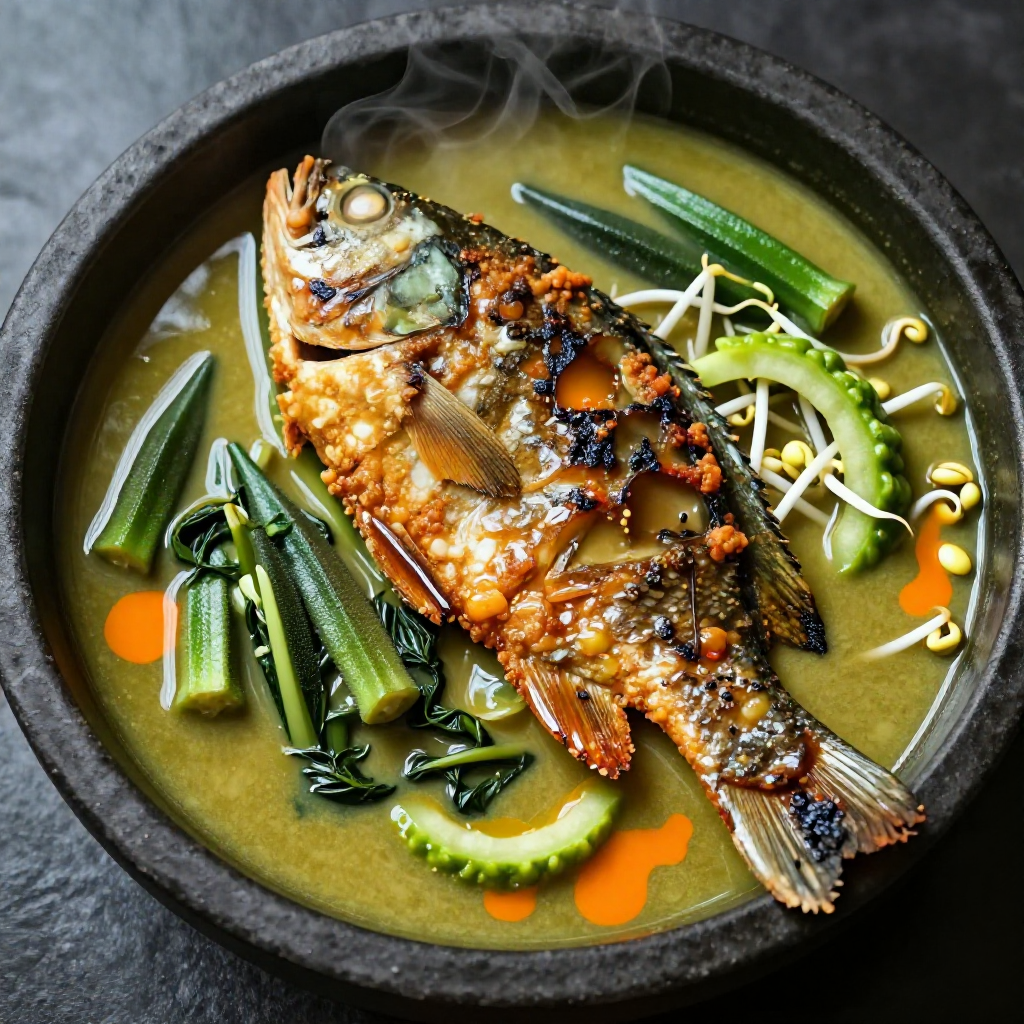
Dinengdeng with Fried Fish
Dinengdeng with Fried Fish is a traditional Filipino dish featuring a savory vegetable stew cooked in a flavorful broth, paired with crispy, golden-brown fried fish. It combines a hearty mix of vegetables and fish, creating a delicious and nutritious meal that's perfect with a side of white rice.
Instructions
- Rub salt all over the fish. Heat oil in a pan. Once the oil gets hot, fry the fish until the side turns golden brown. Turn the fish over and continue to fry the other side until the same color is achieved. Remove the fried fish from the cooking pot. Place in a plate and set aside.
- Pour water in a clean cooking pot. Let boil.
- Fold in onion, ginger, and tomato. Cover and boil in medium heat for 5 minutes.
- Stir-in the bagoong. Add okra, bitter gourd, and snake beans. Cover and cook for 7 to 12 minutes.
- Add the hot pepper leaves and squash flower. Cook for 3 minutes.
- Put the fried fish top. Cover. Cook for 1 minute. Transfer to a serving bowl.
- Serve.
Kitchen Tools We Recommend
Cook Dinengdeng with Fried Fish the easy way with the right tools. Shop our favorite kitchen essentials on Amazon — from reliable pots and pans to measuring tools that make Filipino cooking simpler.
🔥 Trending on Amazon right now — these products are selling fast. Check out what's climbing the charts.
As an Amazon Associate, I earn from qualifying purchases.
Pro Tips & Troubleshooting
- Make sure the pan and oil are hot before adding ingredients for the best sear.
- Fry in batches to avoid overcrowding — lowering the temperature makes food greasy.
- Let the stew rest for 10 minutes after cooking — the flavors deepen noticeably as it sits.
- For fried fish, score the skin in shallow slits to help it cook evenly and prevent curling.
Cooking Tips
Use a thermometer to maintain oil temperature at 350–375°F (175–190°C). If the oil is too cool, the food absorbs grease; too hot and it burns on the outside before cooking through.
True to Ilocano tradition, this Dinengdeng with Fried Fish pairs wonderfully with a side of steamed rice and fresh bagoong (fermented shrimp paste) for an authentic regional experience.
Substitutions
Storage & Reheating
Crispy dishes are best enjoyed fresh — they lose their crunch when stored. If you must store leftovers, reheat in an air fryer or oven at 375°F (190°C) for 5–7 minutes to restore crispiness.
Avoid microwaving crispy dishes — the steam makes the coating soggy. Use a toaster oven or stovetop skillet instead.
Reheat on the stovetop over medium-low heat, adding a splash of water or broth if the sauce has thickened during storage. Microwave in 30-second bursts, stirring between each.
Comments (0)
Leave a comment