Pro Tips
**Chef's Tips & Troubleshooting:**
- Don't open the oven door during the first half of baking — the temperature drop can cause cakes to collapse.
- Measure flour by spooning it into the cup, not scooping directly — scooping packs it down and adds up to 25% more flour.
- Preheat the oven fully before putting anything in — a cold oven gives dense, flat results.
Cooking Tips
Let the dessert cool completely before slicing or serving — many Filipino sweets set and develop their best texture as they rest. Use fresh coconut milk (gata) when available rather than canned. The natural sweetness and rich consistency make a noticeable difference.
Ingredient Substitutions
Out of cane vinegar? White vinegar, apple cider vinegar, or rice vinegar all work — each brings its own subtle character. Avoid balsamic (too sweet) or distilled white (too harsh). Lemon or calamansi juice can replace vinegar in most marinades and braises. Add a pinch of sugar to balance the acidity. No coconut milk? For a richer alternative, blend canned coconut cream with water (1:1). For a lighter option, use evaporated milk with a splash of coconut extract. In a pinch, heavy cream or full-fat milk can replace coconut milk — the texture will be similar though the flavor profile changes. Short on time? A pressure cooker (Instant Pot) can reduce cooking time by roughly half for most braised and stewed Filipino dishes. Reduce liquid slightly since less evaporates.
Storage & Reheating
Store in an airtight container in the refrigerator for up to 3–4 days. The flavors often deepen overnight, making leftovers even more delicious. Store desserts in a sealed container at room temperature for up to 2 days, or refrigerate for up to a week. Let chilled desserts come to room temperature before serving for the best texture and flavor. Reheat on the stovetop over medium-low heat, adding a splash of water or broth if the sauce has thickened during storage. Microwave in 30-second bursts, stirring between each.
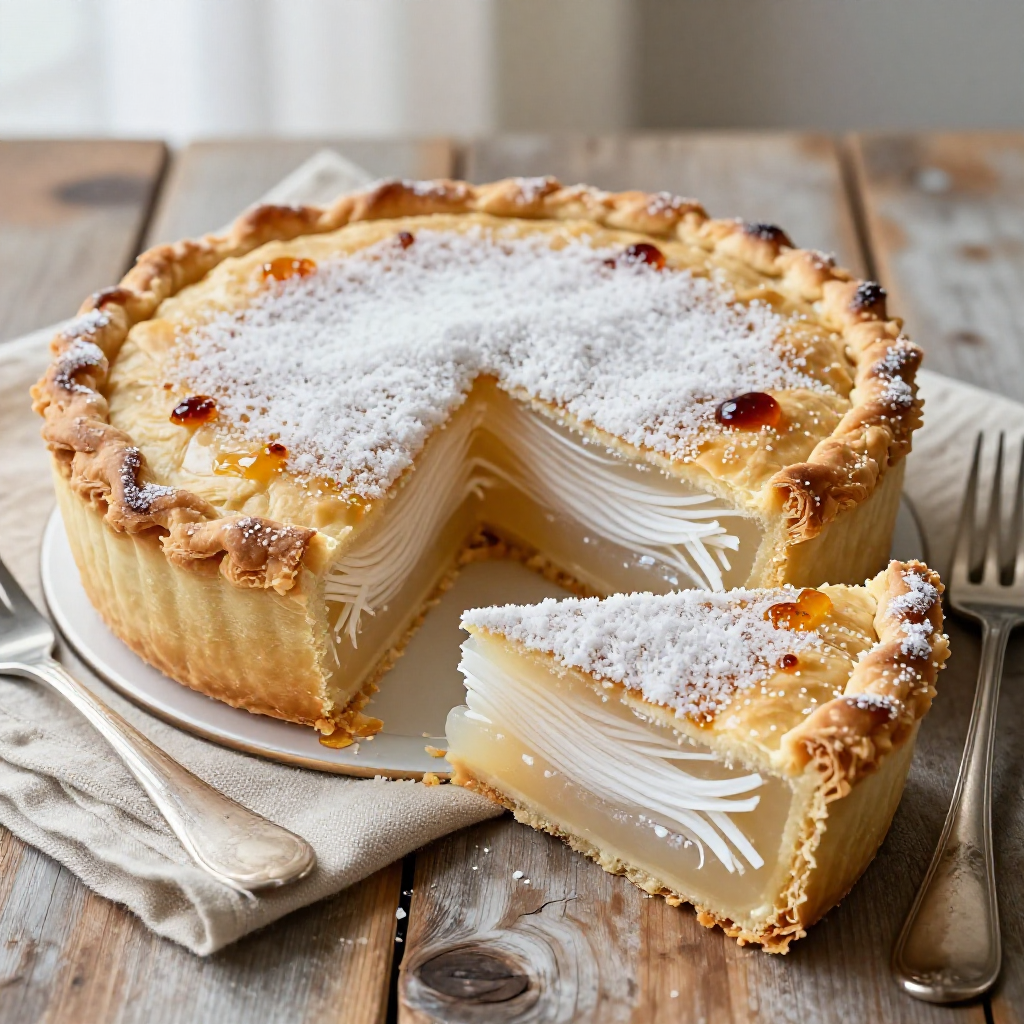
Buko Pie (Filipino Coconut Pie)
Buko Pie is the ultimate baked treat! With tender young coconut meat in a creamy filling and a crisp, buttery pastry crust, this Filipino coconut pie is perfect for a snack or dessert!
Instructions
- Dissolve the cornstarch in coconut water.
- In a saucepan over medium-low heat, combine the cream and sugar and Bring it to a simmer. Cook it until sugar is completely dissolved.
- Add the coconut meat.
- Slowly add the coconut water with cornstarch, stirring them around. Cook, stirring frequently, for about 3 to 5 minutes or until the sauce thickens to almost paste-like consistency.
- Remove from heat and allow to cool completely.
- In a bowl, sift flour and salt.
- Add chilled lard and cut in with a knife until resembling small peas. Make sure they are not too small or the crust will be crumbly.
- Add lemon juice or vinegar to the cold water and sprinkle in just enough cold water to the flour mixture, while tossing lightly with a fork, to form a ball.
- Chill, if possible, to make for easier handling. Divide into two equal parts, one for the bottom and one for the top crust.
- Take 1 part of the pie dough and place it on a floured surface. Roll it out thinly to fit a 28x4 cm pie pan with additional inch allowance for the edges.
- Carefully fold the rolled dough in half and then in a quarter. Place the dough on top of the pie pan with the pointed part precisely in the middle. Unfold the pie dough and gently fit the dough on the bottom and sides of the plate without tearing it.
- Using kitchen shears, trim dough to a 1-inch overhang; fold under, and press gently to seal. Crimp edges if desired. Refrigerate 30 minutes to an hour before using.
- Take the remaining half of the dough and roll it forming a circle with the same diameter as the top of the pie pan (28cm). Place the dough on parchment paper and roll it together into a cylinder. Refrigerate until ready to use.
- Preheat to 425 F.
- Pour the filling on the chilled pie crust, making sure that the coconut meat is evenly distributed.
- Unroll the second crust dough with the parchment paper to cover the top of the pie. Cut the excess from the edges, if any, and pinch the sides to seal together with the crust.
- Using tines of a fork, poke holes on top crust to serve as vents for the steam while baking.
- Bake in a 425 F oven for 10 minutes.
- In a bowl, whisk together the egg and milk. Remove the pie from oven and brush the top with the egg wash.
- Lower the temperature to 350 F and bake for another 30-40 minutes.
- Remove pie from oven and let it cool down for the filling to set. Serve warm or cold.
- The texture of the buko is very important in the success of this recipe. Choose young coconuts that have a generous amount of meat yet but are still very tender.
- Carefully remove the meat using a spoon instead of a shredder for whole and chunky pieces instead of thin strips.
- For a smooth filling, cook at a gentle simmer and do not boil lest the cream curdles or separates.
- Let the filling cool completely before using as the escaping steam might tear the dough apart.
- Do NOT skip the lemon juice or vinegar! Adding acid interferes with gluten formation, resulting in a more tender crust.
- Use VERY cold ingredients for buttery, flaky crust. You can chill the lard and flour for a few minutes to help maintain cool temperatures.
- For a tender crust, add ice-cold water sparingly and use just enough amount for the dough to hold together.
- Work quickly to prevent the dough from heating up. If it's too soft to handle or it begins to stick on the working surface, chill the dough in the refrigerator for few minutes before rolling.
- You can make decorative crimps on the edges of the pie or use the tines of a fork to seal.
- Poke holes on the top crust using the tines of a fork to serve as vents for the steam during baking.
- Bake the pie for about 10 minutes and then brush with egg wash for a nice golden color.
- Remove from the oven and allow to cool before slicing for the filling to set.
Kitchen Tools We Recommend
Cook Buko Pie (Filipino Coconut Pie) the easy way with the right tools. Shop our favorite kitchen essentials on Amazon — from reliable pots and pans to measuring tools that make Filipino cooking simpler.
🔥 Trending on Amazon right now — these products are selling fast. Check out what's climbing the charts.
As an Amazon Associate, I earn from qualifying purchases.
Pro Tips & Troubleshooting
- Don't open the oven door during the first half of baking — the temperature drop can cause cakes to collapse.
- Measure flour by spooning it into the cup, not scooping directly — scooping packs it down and adds up to 25% more flour.
- Preheat the oven fully before putting anything in — a cold oven gives dense, flat results.
Cooking Tips
Use fresh coconut milk (gata) when available rather than canned. The natural sweetness and rich consistency make a noticeable difference.
Substitutions
Lemon or calamansi juice can replace vinegar in most marinades and braises. Add a pinch of sugar to balance the acidity.
No coconut milk? For a richer alternative, blend canned coconut cream with water (1:1). For a lighter option, use evaporated milk with a splash of coconut extract.
In a pinch, heavy cream or full-fat milk can replace coconut milk — the texture will be similar though the flavor profile changes.
Short on time? A pressure cooker (Instant Pot) can reduce cooking time by roughly half for most braised and stewed Filipino dishes. Reduce liquid slightly since less evaporates.
Storage & Reheating
Store desserts in a sealed container at room temperature for up to 2 days, or refrigerate for up to a week. Let chilled desserts come to room temperature before serving for the best texture and flavor.
Reheat on the stovetop over medium-low heat, adding a splash of water or broth if the sauce has thickened during storage. Microwave in 30-second bursts, stirring between each.
Comments (0)
Leave a comment