Pro Tips
**Chef's Tips & Troubleshooting:**
- Dress salads just before serving — dressing too early makes everything soggy.
- For macaroni salad, cook the pasta al dente since it continues to soften in the dressing.
- Mayo-based salads taste best after sitting in the fridge for an hour to let flavors meld.
Cooking Tips
Blanch leafy vegetables in boiling salted water for 30–60 seconds, then plunge into ice water. This locks in their bright color and crisp texture. Add vegetables in stages — hard vegetables (carrots, potatoes) go in first, tender ones (leafy greens, beansprouts) at the very end. Have all your ingredients prepped and measured before you start cooking — quick dishes leave no time for chopping mid-recipe.
Ingredient Substitutions
No soy sauce? Use tamari (gluten-free), coconut aminos (paleo-friendly), or a mix of fish sauce and water for a different but delicious umami profile. For a low-sodium version, use light soy sauce or dilute regular soy sauce with a splash of water or broth. Out of cane vinegar? White vinegar, apple cider vinegar, or rice vinegar all work — each brings its own subtle character. Avoid balsamic (too sweet) or distilled white (too harsh). Lemon or calamansi juice can replace vinegar in most marinades and braises. Add a pinch of sugar to balance the acidity. Short on time? A pressure cooker (Instant Pot) can reduce cooking time by roughly half for most braised and stewed Filipino dishes. Reduce liquid slightly since less evaporates.
Storage & Reheating
Store in an airtight container in the refrigerator for up to 3–4 days. The flavors often deepen overnight, making leftovers even more delicious. Reheat on the stovetop over medium-low heat, adding a splash of water or broth if the sauce has thickened during storage. Microwave in 30-second bursts, stirring between each.
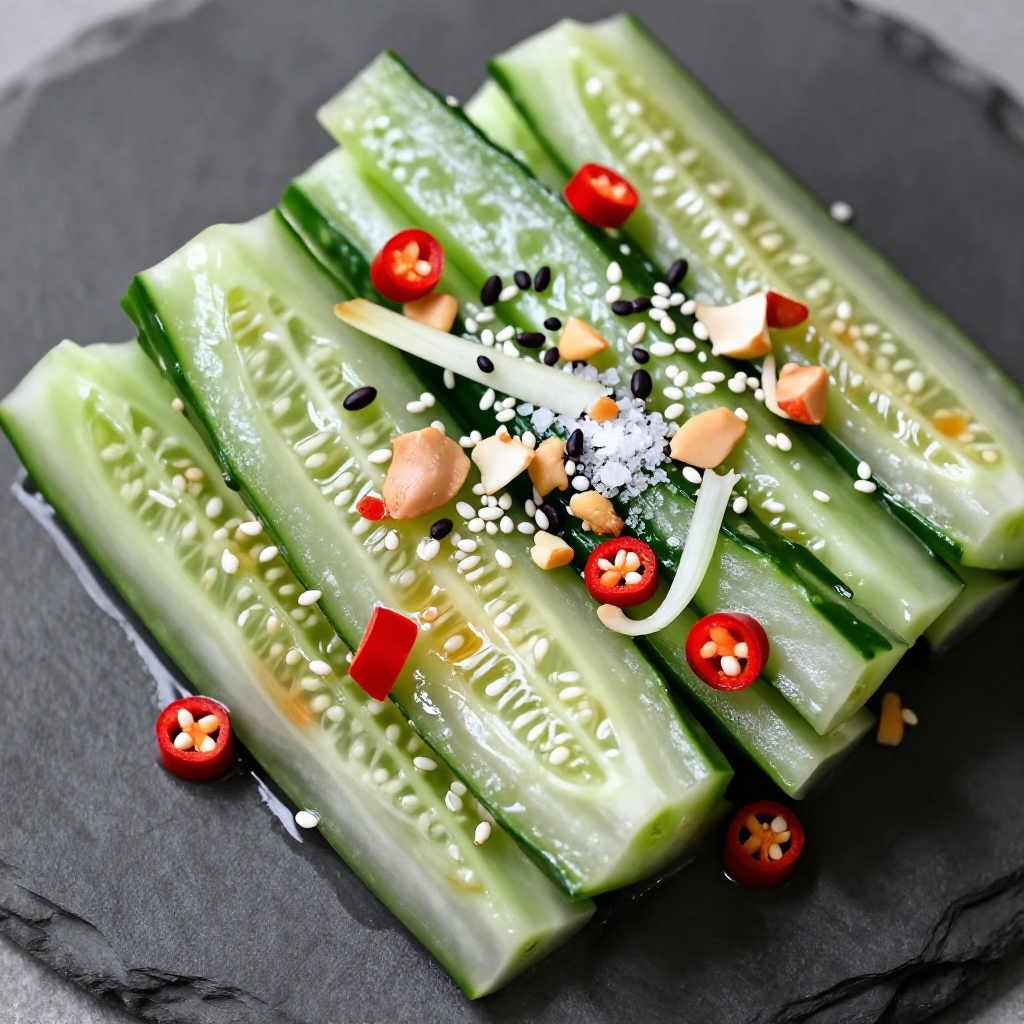
Asian Cucumber Salad
A vegetable-forward Filipino dish built on cucumber, rice vinegar, sugar and soy sauce — simple, healthy, and full of flavor.
Instructions
- Thinly slice the cucumber into half-moons or use a mandoline for very thin ribbons.
- Lightly salt the cucumber slices and let them sit for 5 minutes. Pat them dry with paper towels to remove excess moisture.
- In a bowl, whisk together the rice vinegar, sugar, soy sauce, and sesame oil until the sugar dissolves completely.
- Toss in the cucumber to a serving bowl. Mince the garlic and add it along with the chili flakes to taste.
- Pour in the dressing over the cucumber and toss well. Sprinkle with sesame seeds.
- Let the salad stand for 10 minutes before serving so the cucumber absorbs the dressing.
- Serve chilled as a refreshing side dish.
Kitchen Tools We Recommend
Cook Asian Cucumber Salad the easy way with the right tools. Shop our favorite kitchen essentials on Amazon — from reliable pots and pans to measuring tools that make Filipino cooking simpler.
🔥 Trending on Amazon right now — these products are selling fast. Check out what's climbing the charts.
As an Amazon Associate, I earn from qualifying purchases.
Pro Tips & Troubleshooting
- Dress salads just before serving — dressing too early makes everything soggy.
- For macaroni salad, cook the pasta al dente since it continues to soften in the dressing.
- Mayo-based salads taste best after sitting in the fridge for an hour to let flavors meld.
Cooking Tips
Add vegetables in stages — hard vegetables (carrots, potatoes) go in first, tender ones (leafy greens, beansprouts) at the very end.
Have all your ingredients prepped and measured before you start cooking — quick dishes leave no time for chopping mid-recipe.
Substitutions
For a low-sodium version, use light soy sauce or dilute regular soy sauce with a splash of water or broth.
Out of cane vinegar? White vinegar, apple cider vinegar, or rice vinegar all work — each brings its own subtle character. Avoid balsamic (too sweet) or distilled white (too harsh).
Lemon or calamansi juice can replace vinegar in most marinades and braises. Add a pinch of sugar to balance the acidity.
Short on time? A pressure cooker (Instant Pot) can reduce cooking time by roughly half for most braised and stewed Filipino dishes. Reduce liquid slightly since less evaporates.
Storage & Reheating
Reheat on the stovetop over medium-low heat, adding a splash of water or broth if the sauce has thickened during storage. Microwave in 30-second bursts, stirring between each.
Comments (0)
Leave a comment