Pro Tips
**Chef's Tips & Troubleshooting:**
- For a more flavorful sinigang broth, use bone-in meat cuts and simmer for at least 45 minutes.
- Add the souring agent gradually and taste as you go to achieve the perfect sourness.
- Add leafy greens like kangkong in the last minute of cooking to keep them bright green.
- Trim excess fat from the pork belly but leave a thin layer to keep the meat moist during cooking.
Cooking Tips
Skim off any scum or impurities that rise to the surface during the first boil — this keeps the broth clear and clean-tasting. For the richest flavor, start with cold water and bring to a gentle simmer rather than a rolling boil. This extracts more depth from the meat and bones.
Ingredient Substitutions
Out of cane vinegar? White vinegar, apple cider vinegar, or rice vinegar all work — each brings its own subtle character. Avoid balsamic (too sweet) or distilled white (too harsh). Lemon or calamansi juice can replace vinegar in most marinades and braises. Add a pinch of sugar to balance the acidity. No fish sauce (patis)? Soy sauce or Worcestershire sauce are decent substitutes in cooked dishes. For a closer match, try anchovy paste dissolved in water. Pork alternatives: Chicken thighs work well in most pork recipes (they stay moist like pork does). For a leaner option, use turkey breast or firm tofu. Short on time? A pressure cooker (Instant Pot) can reduce cooking time by roughly half for most braised and stewed Filipino dishes. Reduce liquid slightly since less evaporates.
Storage & Reheating
Store in an airtight container in the refrigerator for up to 3–4 days. The flavors often deepen overnight, making leftovers even more delicious. This dish freezes exceptionally well — portion into freezer-safe containers and store for up to 3 months. Thaw overnight in the refrigerator before reheating. When reheating frozen portions, add a splash of water or broth to restore the original consistency, as some liquid is absorbed during storage. For soup/stew dishes, reheat on the stovetop over medium-low heat rather than the microwave. Gentle stovetop reheating preserves the texture of vegetables and meat.
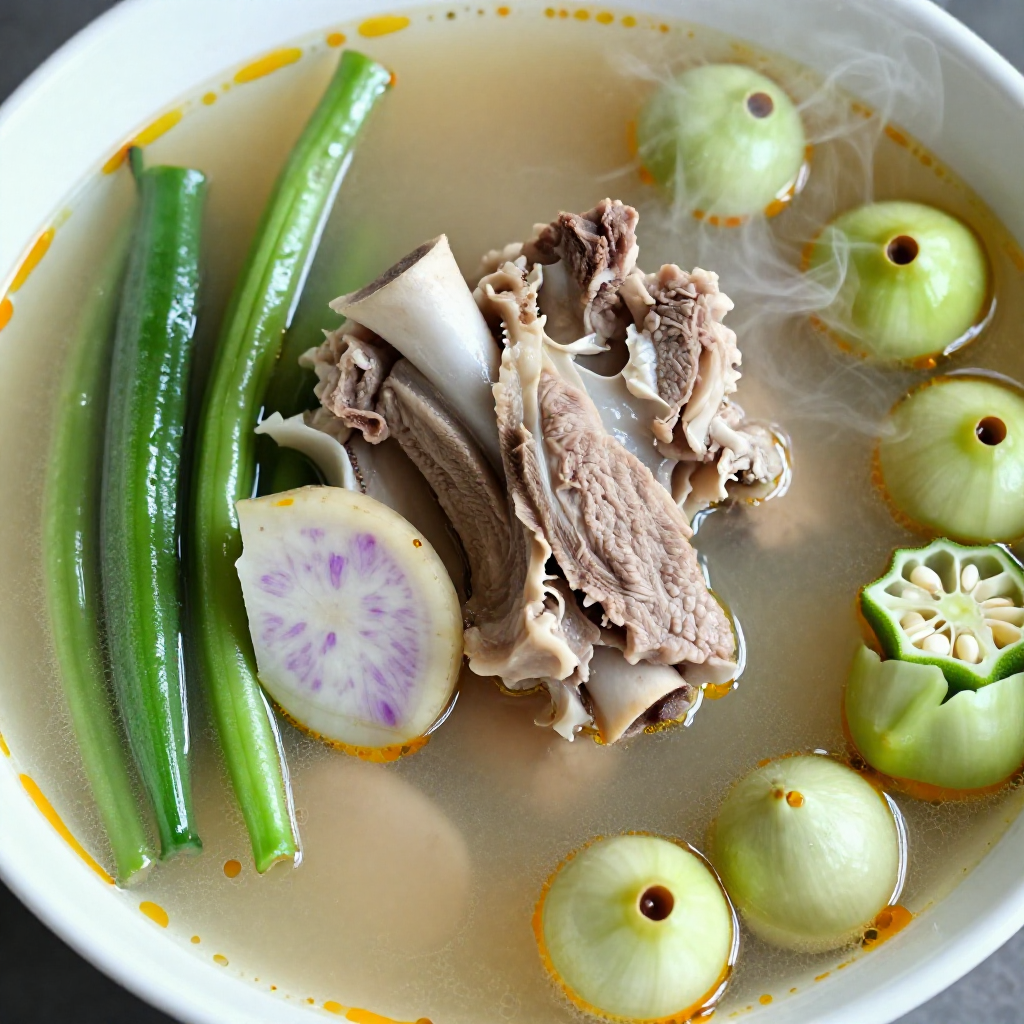
Pork Sinigang sa Kamias
Pork belly simmered in tangy tamarind sour soup with vegetables. The ultimate Filipino comfort food.
Instructions
- Combine the water, tomato, onion, and kamias in a cooking pot. Let boil.
- Add the pork slices. Let the water re-boil. Cover and simmer for 30 minutes.
- Add the gabi (eddo) and green peppers. Cover and continue to simmer for another 30 minutes or until the pork is tender.
- Add the fish sauce. Stir.
- Put-in the okra, string beans, and eggplant. Cook for 5 minutes.
- Incorporate the kangkong. Cover the cooking pot and turn the heat off. Let the residual heat cook the kangkong.
- Transfer to a serving bowl.
- Serve.
Kitchen Tools We Recommend
Cook Pork Sinigang sa Kamias the easy way with the right tools. Shop our favorite kitchen essentials on Amazon — from reliable pots and pans to measuring tools that make Filipino cooking simpler.
🔥 Trending on Amazon right now — these products are selling fast. Check out what's climbing the charts.
As an Amazon Associate, I earn from qualifying purchases.
Pro Tips & Troubleshooting
- For a more flavorful sinigang broth, use bone-in meat cuts and simmer for at least 45 minutes.
- Add the souring agent gradually and taste as you go to achieve the perfect sourness.
- Add leafy greens like kangkong in the last minute of cooking to keep them bright green.
- Trim excess fat from the pork belly but leave a thin layer to keep the meat moist during cooking.
Cooking Tips
For the richest flavor, start with cold water and bring to a gentle simmer rather than a rolling boil. This extracts more depth from the meat and bones.
Substitutions
Lemon or calamansi juice can replace vinegar in most marinades and braises. Add a pinch of sugar to balance the acidity.
No fish sauce (patis)? Soy sauce or Worcestershire sauce are decent substitutes in cooked dishes. For a closer match, try anchovy paste dissolved in water.
Pork alternatives: Chicken thighs work well in most pork recipes (they stay moist like pork does). For a leaner option, use turkey breast or firm tofu.
Short on time? A pressure cooker (Instant Pot) can reduce cooking time by roughly half for most braised and stewed Filipino dishes. Reduce liquid slightly since less evaporates.
Storage & Reheating
This dish freezes exceptionally well — portion into freezer-safe containers and store for up to 3 months. Thaw overnight in the refrigerator before reheating.
When reheating frozen portions, add a splash of water or broth to restore the original consistency, as some liquid is absorbed during storage.
For soup/stew dishes, reheat on the stovetop over medium-low heat rather than the microwave. Gentle stovetop reheating preserves the texture of vegetables and meat.
Comments (0)
Leave a comment