Pro Tips
**Chef's Tips & Troubleshooting:**
Firm fish (grouper, snapper, tilapia) holds up best in coconut broth. Add the fish last and cook just until opaque — about 5–7 minutes. Overcooked fish turns rubbery and falls apart when you stir.
Keep the coconut milk at a gentle simmer, not a rolling boil. Vigorous boiling breaks the emulsion and the milk separates into curdled bits. A slow simmer keeps the sauce silky and rich.
Add malunggay (moringa) leaves at the very end — they wilt in seconds and lose their bright green color and nutrients if cooked too long.
Cooking Tips
Blanch leafy vegetables in boiling salted water for 30–60 seconds, then plunge into ice water. This locks in their bright color and crisp texture. Add vegetables in stages — hard vegetables (carrots, potatoes) go in first, tender ones (leafy greens, beansprouts) at the very end. True to Ilocano tradition, this Pinangat na Talong pairs wonderfully with a side of steamed rice and fresh bagoong (fermented shrimp paste) for an authentic regional experience.
Ingredient Substitutions
No coconut milk? For a richer alternative, blend canned coconut cream with water (1:1). For a lighter option, use evaporated milk with a splash of coconut extract. In a pinch, heavy cream or full-fat milk can replace coconut milk — the texture will be similar though the flavor profile changes. Short on time? A pressure cooker (Instant Pot) can reduce cooking time by roughly half for most braised and stewed Filipino dishes. Reduce liquid slightly since less evaporates.
Storage & Reheating
Store in an airtight container in the refrigerator for up to 3–4 days. The flavors often deepen overnight, making leftovers even more delicious. Reheat on the stovetop over medium-low heat, adding a splash of water or broth if the sauce has thickened during storage. Microwave in 30-second bursts, stirring between each.
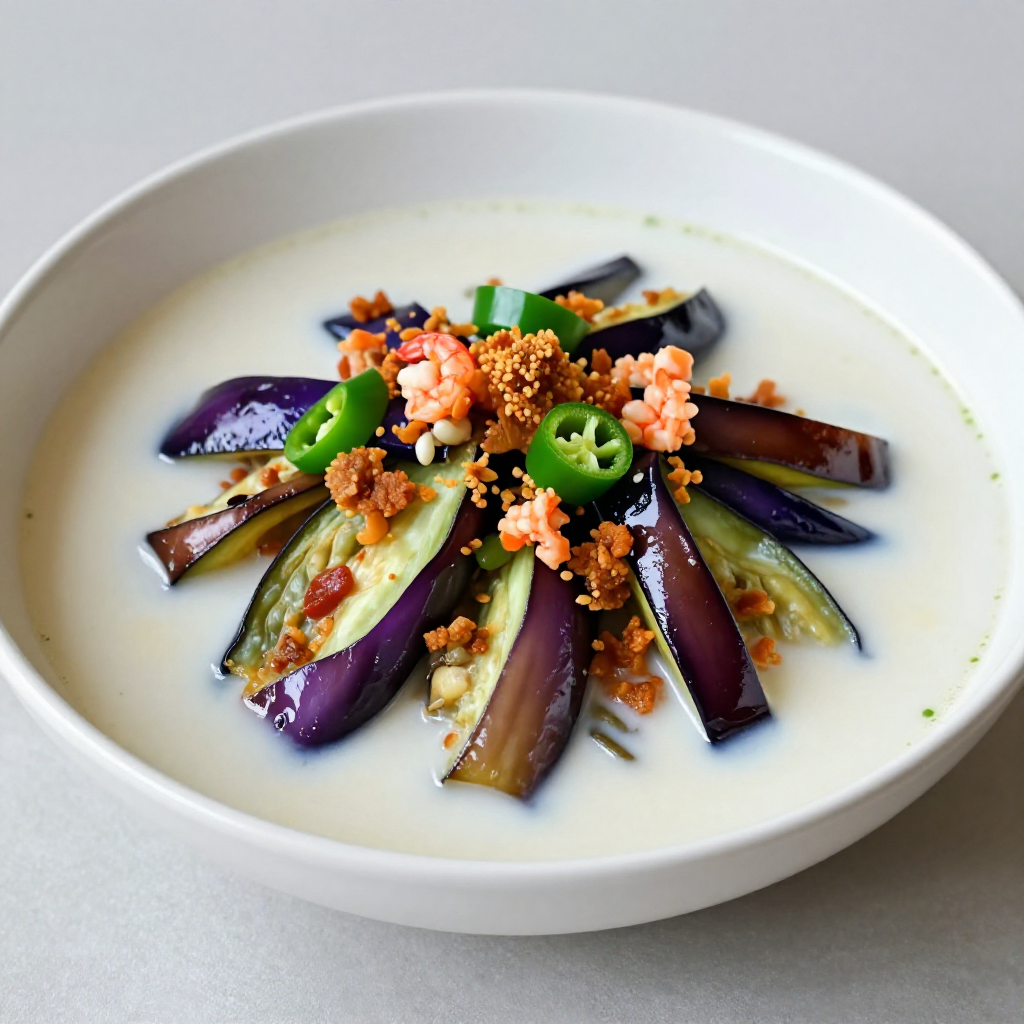
Pinangat na Talong
Pinangat na Talong is an Ilocano delicacy that takes soft roasted eggplant and simmers it in a tangy coconut milk broth with green chilies and shrimp paste. It's a dish that proves you don't need meat to make a deeply satisfying Filipino meal. The eggplant absorbs every flavor of the gata-bagoong base, becoming almost melt-in-your-mouth tender. Traditionally made in Ilocos during lean months, it's now a beloved regional comfort food enjoyed year-round.
Instructions
- Roast the whole eggplants over an open flame (gas stove works great) until the skin is charred and the flesh is completely soft. You'll need to turn them occasionally. Once done, peel off the charred skin — use your hands or a knife. Squeeze out the seeds if you prefer a cleaner texture, then tear the eggplant into bite-sized pieces.
- In a separate small pan, dry-toast the bagoong alamang over low heat for about 2–3 minutes until fragrant and slightly caramelized. This step removes any raw smell and intensifies the flavor. Set aside.
- In a medium pot, heat the cooking oil over medium heat. Sauté the garlic until golden, then add the diced onion and cook until translucent. Add the diced tomato and cook until it breaks down into a soft pulp.
- Pour in the thick coconut milk and stir in the toasted bagoong. Add the fish sauce, salt, and the sliced siling haba. Let it simmer for about 5 minutes until the flavors are well combined.
- Gently add the torn eggplant pieces into the coconut broth, making sure each piece gets coated. Simmer on low heat for 8–10 minutes. The eggplant should become very soft and start to fall apart — that's exactly what you want.
- Stir in the thin coconut milk to adjust the consistency, then add the finely chopped siling haba. Simmer for 2 more minutes. Taste and adjust seasoning. Serve hot with steamed rice — the eggplant soaks up the coconut-bagoong broth beautifully.
Kitchen Tools We Recommend
Cook Pinangat na Talong the easy way with the right tools. Shop our favorite kitchen essentials on Amazon — from reliable pots and pans to measuring tools that make Filipino cooking simpler.
🔥 Trending on Amazon right now — these products are selling fast. Check out what's climbing the charts.
As an Amazon Associate, I earn from qualifying purchases.
Pro Tips & Troubleshooting
Firm fish (grouper, snapper, tilapia) holds up best in coconut broth. Add the fish last and cook just until opaque — about 5–7 minutes. Overcooked fish turns rubbery and falls apart when you stir.
Keep the coconut milk at a gentle simmer, not a rolling boil. Vigorous boiling breaks the emulsion and the milk separates into curdled bits. A slow simmer keeps the sauce silky and rich.
Add malunggay (moringa) leaves at the very end — they wilt in seconds and lose their bright green color and nutrients if cooked too long.
Cooking Tips
Add vegetables in stages — hard vegetables (carrots, potatoes) go in first, tender ones (leafy greens, beansprouts) at the very end.
True to Ilocano tradition, this Pinangat na Talong pairs wonderfully with a side of steamed rice and fresh bagoong (fermented shrimp paste) for an authentic regional experience.
Substitutions
In a pinch, heavy cream or full-fat milk can replace coconut milk — the texture will be similar though the flavor profile changes.
Short on time? A pressure cooker (Instant Pot) can reduce cooking time by roughly half for most braised and stewed Filipino dishes. Reduce liquid slightly since less evaporates.
Storage & Reheating
Reheat on the stovetop over medium-low heat, adding a splash of water or broth if the sauce has thickened during storage. Microwave in 30-second bursts, stirring between each.
Comments (0)
Leave a comment