Pro Tips
**Chef's Tips & Troubleshooting:**
Day-old refrigerated rice works best — freshly cooked rice is too moist and will turn the dish mushy. Spread leftover rice on a tray and chill overnight for the best texture.
The Chinese sausage (lap chang) is essential to the authentic flavor. Look for it in Asian grocery stores in the preserved meats section. Slice it thin — it renders its own sweet, smoky fat into the rice.
Cook over high heat. Fried rice needs a hot wok to get that characteristic smoky, slightly charred flavor (wok hei). If your stove isn't powerful enough, batch-cook in smaller portions.
Chinese ham gives the dish its signature taste. If unavailable, regular ham works but won't have the same savory-sweet profile.
Add the shrimp at the end — they cook in under a minute and will rubberize if overdone.
Cooking Tips
Have all your ingredients prepped and measured before you start cooking — quick dishes leave no time for chopping mid-recipe.
Ingredient Substitutions
Short on time? A pressure cooker (Instant Pot) can reduce cooking time by roughly half for most braised and stewed Filipino dishes. Reduce liquid slightly since less evaporates.
Storage & Reheating
Store in an airtight container in the refrigerator for up to 3–4 days. The flavors often deepen overnight, making leftovers even more delicious. Reheat on the stovetop over medium-low heat, adding a splash of water or broth if the sauce has thickened during storage. Microwave in 30-second bursts, stirring between each.

Morisqueta Tostada
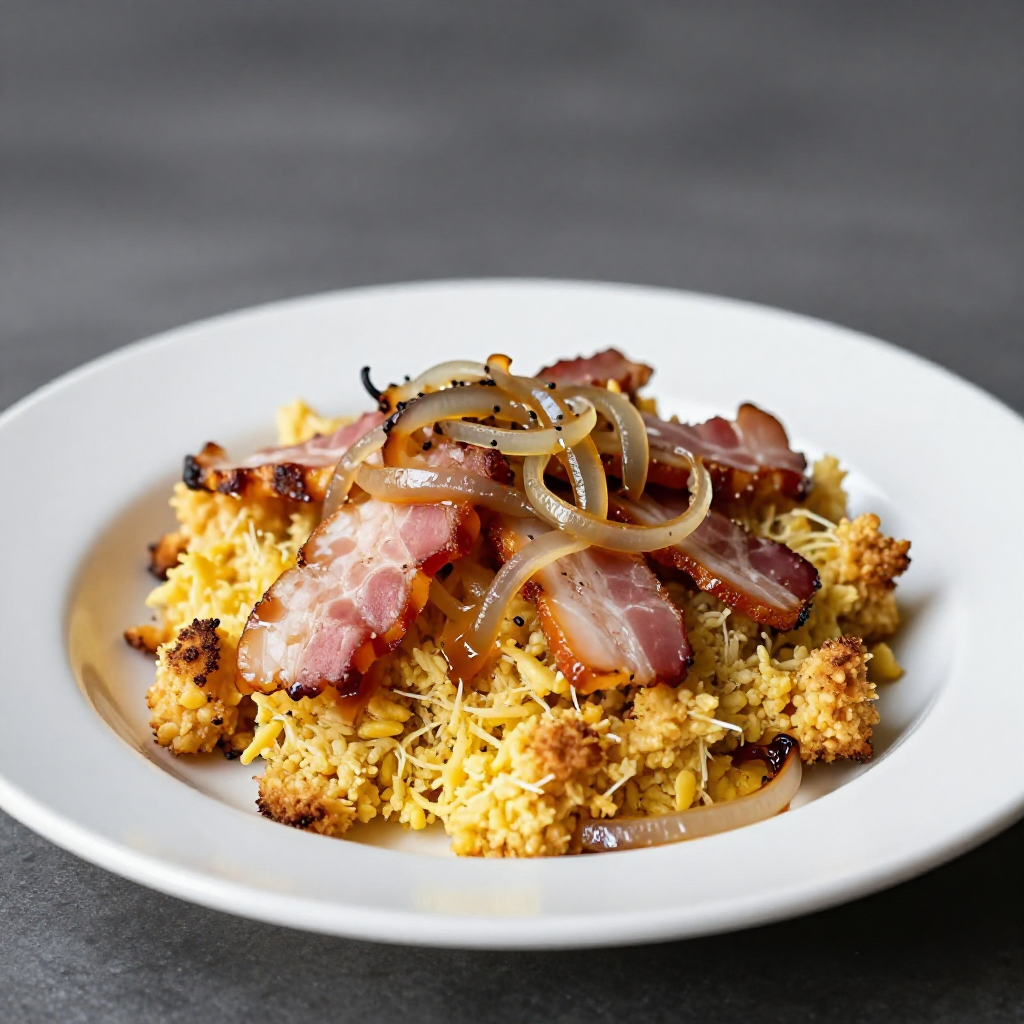
Morisqueta Tostada is a living relic of Spanish colonial-era Zamboanga — a Chavacano-style fried rice that carries the flavor of three cultures on one plate. 'Morisqueta' comes from the Chavacano (Spanish-Filipino creole) word for boiled rice, while 'tostada' nods to its fried preparation. The dish evolved in the port cities where Spanish, Chinese, and Malay traders converged, and it shows: Chinese sausage and ham bring umami depth, shrimp add briny sweetness, and the whole thing is tossed with soy sauce and pepper in a sizzling wok. Most Filipino grandparents who grew up in Manila, Cebu, or Zamboanga near Chinese communities remember this dish from their childhood. Today it is a rarity outside those neighborhoods, making it a treasured piece of culinary heritage.
Instructions
- Break up any clumps in the cold rice with your fingers. If the rice is very dry, sprinkle 2 tablespoons of water over it and toss.
- Heat peanut oil in a wok or large skillet over medium-high heat. Add the minced garlic and white parts of the spring onions, and sauté for about 30 seconds until fragrant.
- Add the sliced Chinese sausage and stir-fry over high heat for 1 minute until the edges caramelize and fat renders.
- Add the rice and ham. Loosen the rice with a spatula, breaking up remaining clumps. Stir-fry over high heat for 3 minutes until the rice heats through and starts to fry.
- Push the rice to one side of the wok. Pour the beaten eggs into the empty side and let them set briefly (about 10 seconds), then scramble and fold into the rice. Stir-fry for another 3 minutes.
- Add the shrimp and soy sauce. Season with salt and black pepper to taste. Stir-fry for 1 more minute until the shrimp turn pink.
- Turn off the heat. Toss in the green parts of the spring onions and give everything one final stir.
- Serve immediately while hot, straight from the wok.
Kitchen Tools We Recommend
Cook Morisqueta Tostada the easy way with the right tools. Shop our favorite kitchen essentials on Amazon — from reliable pots and pans to measuring tools that make Filipino cooking simpler.
🔥 Trending on Amazon right now — these products are selling fast. Check out what's climbing the charts.
As an Amazon Associate, I earn from qualifying purchases.
Pro Tips & Troubleshooting
Day-old refrigerated rice works best — freshly cooked rice is too moist and will turn the dish mushy. Spread leftover rice on a tray and chill overnight for the best texture.
The Chinese sausage (lap chang) is essential to the authentic flavor. Look for it in Asian grocery stores in the preserved meats section. Slice it thin — it renders its own sweet, smoky fat into the rice.
Cook over high heat. Fried rice needs a hot wok to get that characteristic smoky, slightly charred flavor (wok hei). If your stove isn't powerful enough, batch-cook in smaller portions.
Chinese ham gives the dish its signature taste. If unavailable, regular ham works but won't have the same savory-sweet profile.
Add the shrimp at the end — they cook in under a minute and will rubberize if overdone.
Cooking Tips
Substitutions
Storage & Reheating
Reheat on the stovetop over medium-low heat, adding a splash of water or broth if the sauce has thickened during storage. Microwave in 30-second bursts, stirring between each.



Comments (0)
Leave a comment