Pro Tips
**Chef's Tips & Troubleshooting:**
- If you prefer a darker, caramelized adobo, add a tablespoon of brown sugar toward the end of cooking.
- The longer adobo simmers, the more tender the meat gets. Many households make it a day ahead for better flavor.
- Bay leaves lose flavor quickly — add them early but remove before serving if you prefer.
Cooking Tips
Score the fat cap in a crosshatch pattern before cooking — this helps render the fat evenly and creates a crisper texture. Let pork rest for 5–10 minutes after cooking before slicing. This redistributes juices so every bite stays moist. In true Kapampangan style — the food capital of the Philippines — don't be shy with the seasoning. Pampanga cooking is known for its bold, confident flavors.
Ingredient Substitutions
No soy sauce? Use tamari (gluten-free), coconut aminos (paleo-friendly), or a mix of fish sauce and water for a different but delicious umami profile. For a low-sodium version, use light soy sauce or dilute regular soy sauce with a splash of water or broth. Out of cane vinegar? White vinegar, apple cider vinegar, or rice vinegar all work — each brings its own subtle character. Avoid balsamic (too sweet) or distilled white (too harsh). Lemon or calamansi juice can replace vinegar in most marinades and braises. Add a pinch of sugar to balance the acidity. Pork alternatives: Chicken thighs work well in most pork recipes (they stay moist like pork does). For a leaner option, use turkey breast or firm tofu.
Storage & Reheating
Store in an airtight container in the refrigerator for up to 3–4 days. The flavors often deepen overnight, making leftovers even more delicious. Reheat on the stovetop over medium-low heat, adding a splash of water or broth if the sauce has thickened during storage. Microwave in 30-second bursts, stirring between each.
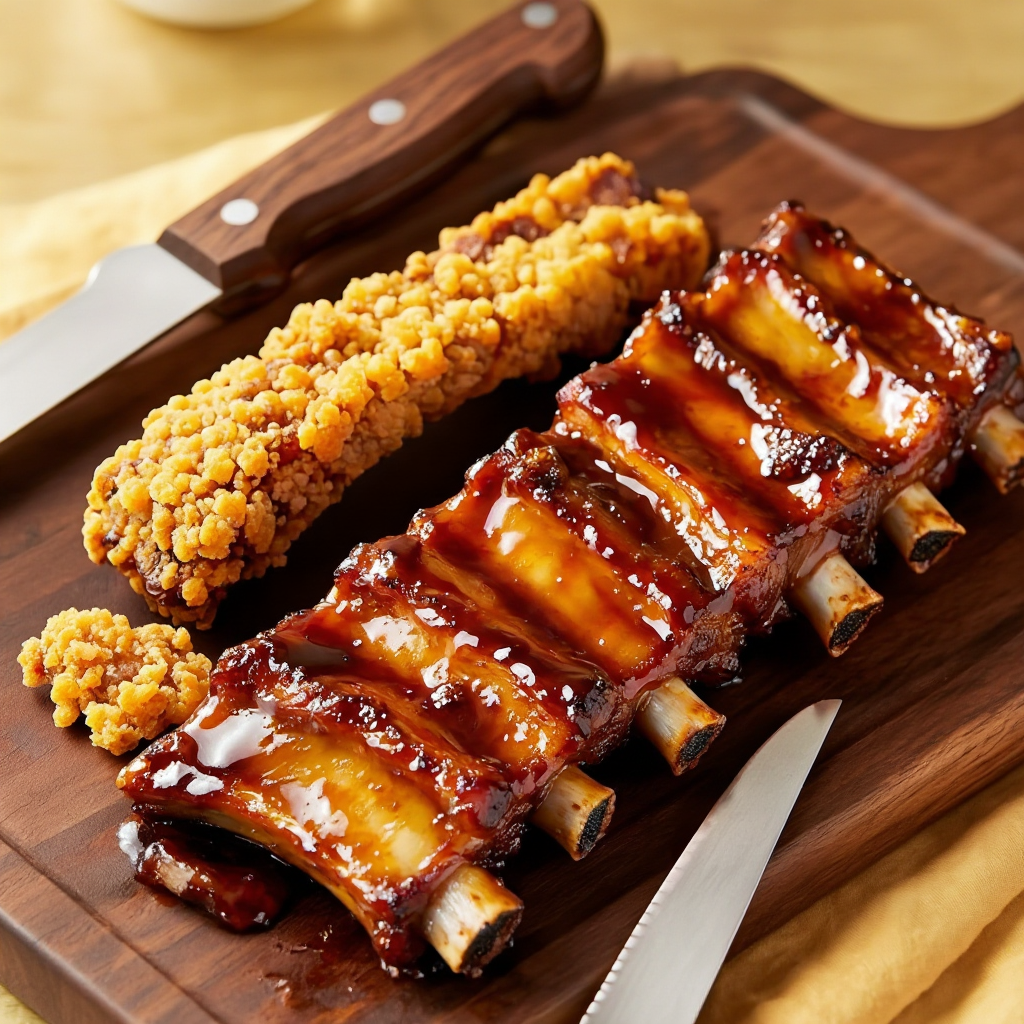
Loslos
Are you looking for the ultimate pork dish? Try Loslos. These crunchy baby back ribs are cooked adobo-style until tender, dredged in flour, and deep-fried to golden perfection. They make a tasty and filling main dish or party fare.
Instructions
- In a pot on medium heat, combine ribs, vinegar, soy sauce, water, garlic, bay leaves, and peppercorns. Bring it to a boil. uncovered and without stirring, for about 5 minutes.
- Lower heat, cover, and Keep cooking for about 40-50 minutes or until ribs are tender but not falling apart.
- Drain ribs, discarding liquid and aromatics. Allow to cool.
- In a shallow dish, combine flour, salt, and pepper.
- In a bowl, beat eggs until foamy.
- Lightly dredge rib pieces in flour, dip in beaten eggs, and then dredge again in flour to fully coat.
- Get a pan on medium heat and warm up about 2-inches deep of oil. Add ribs in batches and deep-fry, turning on sides as needed, for about 4 to 5 minutes or until golden and crisp.
- Remove from pan and drain on paper towels. Serve while hot.
- To keep from drying out, cook the ribs in the adobo mixture until tender but not falling apart as they will Keep cooking when deep-fried.
Kitchen Tools We Recommend
Cook Loslos the easy way with the right tools. Shop our favorite kitchen essentials on Amazon — from reliable pots and pans to measuring tools that make Filipino cooking simpler.
🔥 Trending on Amazon right now — these products are selling fast. Check out what's climbing the charts.
As an Amazon Associate, I earn from qualifying purchases.
Pro Tips & Troubleshooting
- If you prefer a darker, caramelized adobo, add a tablespoon of brown sugar toward the end of cooking.
- The longer adobo simmers, the more tender the meat gets. Many households make it a day ahead for better flavor.
- Bay leaves lose flavor quickly — add them early but remove before serving if you prefer.
Cooking Tips
Let pork rest for 5–10 minutes after cooking before slicing. This redistributes juices so every bite stays moist.
In true Kapampangan style — the food capital of the Philippines — don't be shy with the seasoning. Pampanga cooking is known for its bold, confident flavors.
Substitutions
For a low-sodium version, use light soy sauce or dilute regular soy sauce with a splash of water or broth.
Out of cane vinegar? White vinegar, apple cider vinegar, or rice vinegar all work — each brings its own subtle character. Avoid balsamic (too sweet) or distilled white (too harsh).
Lemon or calamansi juice can replace vinegar in most marinades and braises. Add a pinch of sugar to balance the acidity.
Pork alternatives: Chicken thighs work well in most pork recipes (they stay moist like pork does). For a leaner option, use turkey breast or firm tofu.
Storage & Reheating
Reheat on the stovetop over medium-low heat, adding a splash of water or broth if the sauce has thickened during storage. Microwave in 30-second bursts, stirring between each.
Comments (0)
Leave a comment