Pro Tips
Let the dessert cool completely before serving — this allows the flavors to settle and the texture to firm up properly.
Use room-temperature ingredients (eggs, butter, milk) for the smoothest batter and most even baking.
Cooking Tips
Let the dessert cool completely before slicing or serving — many Filipino sweets set and develop their best texture as they rest. Use fresh coconut milk (gata) when available rather than canned. The natural sweetness and rich consistency make a noticeable difference. True to Ilocano tradition, this Kankalehan pairs wonderfully with a side of steamed rice and fresh bagoong (fermented shrimp paste) for an authentic regional experience.
Ingredient Substitutions
No coconut milk? For a richer alternative, blend canned coconut cream with water (1:1). For a lighter option, use evaporated milk with a splash of coconut extract. In a pinch, heavy cream or full-fat milk can replace coconut milk — the texture will be similar though the flavor profile changes. Short on time? A pressure cooker (Instant Pot) can reduce cooking time by roughly half for most braised and stewed Filipino dishes. Reduce liquid slightly since less evaporates.
Storage & Reheating
Store in an airtight container in the refrigerator for up to 3–4 days. The flavors often deepen overnight, making leftovers even more delicious. Store desserts in a sealed container at room temperature for up to 2 days, or refrigerate for up to a week. Let chilled desserts come to room temperature before serving for the best texture and flavor. Reheat on the stovetop over medium-low heat, adding a splash of water or broth if the sauce has thickened during storage. Microwave in 30-second bursts, stirring between each.
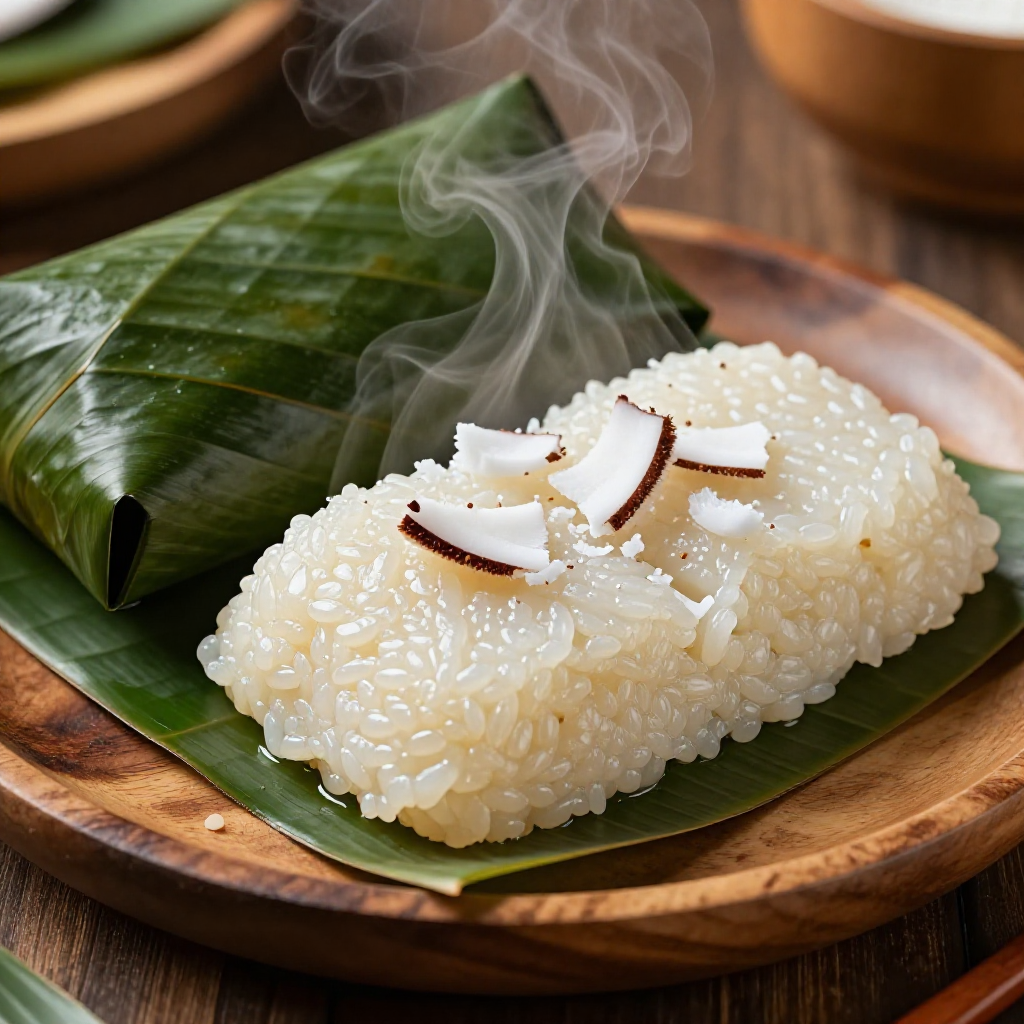
Kankalehan
A beloved Ilocano steamed rice cake made from glutinous rice flour and coconut milk, wrapped in banana leaves and cooked over low heat until tender and slightly caramelized. Kankalehan has a soft, chewy texture with a subtle sweetness that pairs perfectly with a cup of strong coffee or hot chocolate. Often served during fiestas and family gatherings in Ilocos, this humble treat reflects the resourcefulness of Ilocano cuisine.
Instructions
- Wash the banana leaves and wipe them clean with a damp cloth to remove dust. Cut them into 6-by-6-inch squares, making sure to pass them briefly over an open flame to soften and prevent cracking.
- In a large mixing bowl, combine the glutinous rice flour and sugar. Gradually add coconut milk while stirring with a spatula or whisk until the batter is smooth and free of lumps.
- Add salt and a splash of water to the batter, stirring until it reaches a thick but pourable consistency — similar to pancake batter.
- Place a banana leaf square on your palm with the shiny side facing down. Pour a generous spoonful of batter onto the center, spreading it evenly to leave a half-inch border.
- Fold the banana leaf into a neat packet, tucking the edges tightly to seal. Repeat with the remaining batter and banana leaves.
- Arrange the packets in a steamer with a bamboo liner or cloth to prevent sticking. Steam over medium heat for 35 to 40 minutes, adding water as needed.
- Check doneness by unwrapping one packet — the cake should be firm and spring back slightly when pressed. Let cool for 5 minutes before serving.
- Serve warm with a cup of barako coffee or tsokolate. Kankalehan is best enjoyed on the day it is made, though leftovers can be steamed again to refresh.
Kitchen Tools We Recommend
Cook Kankalehan the easy way with the right tools. Shop our favorite kitchen essentials on Amazon — from reliable pots and pans to measuring tools that make Filipino cooking simpler.
🔥 Trending on Amazon right now — these products are selling fast. Check out what's climbing the charts.
As an Amazon Associate, I earn from qualifying purchases.
Pro Tips & Troubleshooting
Use room-temperature ingredients (eggs, butter, milk) for the smoothest batter and most even baking.
Cooking Tips
Use fresh coconut milk (gata) when available rather than canned. The natural sweetness and rich consistency make a noticeable difference.
True to Ilocano tradition, this Kankalehan pairs wonderfully with a side of steamed rice and fresh bagoong (fermented shrimp paste) for an authentic regional experience.
Substitutions
In a pinch, heavy cream or full-fat milk can replace coconut milk — the texture will be similar though the flavor profile changes.
Short on time? A pressure cooker (Instant Pot) can reduce cooking time by roughly half for most braised and stewed Filipino dishes. Reduce liquid slightly since less evaporates.
Storage & Reheating
Store desserts in a sealed container at room temperature for up to 2 days, or refrigerate for up to a week. Let chilled desserts come to room temperature before serving for the best texture and flavor.
Reheat on the stovetop over medium-low heat, adding a splash of water or broth if the sauce has thickened during storage. Microwave in 30-second bursts, stirring between each.
Comments (0)
Leave a comment