Pro Tips
**Chef's Tips & Troubleshooting:**
- Filipino dishes are built on balance — taste your sauce before serving and add a pinch of sugar or a splash of vinegar if something feels off.
- Let meats rest after cooking so the juices redistribute for a more tender result.
- If a recipe calls for fresh produce, it matters — canned or frozen substitutes change the texture and brightness of the dish.
Cooking Tips
Score the fat cap in a crosshatch pattern before cooking — this helps render the fat evenly and creates a crisper texture. Let pork rest for 5–10 minutes after cooking before slicing. This redistributes juices so every bite stays moist.
Ingredient Substitutions
Pork alternatives: Chicken thighs work well in most pork recipes (they stay moist like pork does). For a leaner option, use turkey breast or firm tofu. Short on time? A pressure cooker (Instant Pot) can reduce cooking time by roughly half for most braised and stewed Filipino dishes. Reduce liquid slightly since less evaporates.
Storage & Reheating
Store in an airtight container in the refrigerator for up to 3–4 days. The flavors often deepen overnight, making leftovers even more delicious. Reheat on the stovetop over medium-low heat, adding a splash of water or broth if the sauce has thickened during storage. Microwave in 30-second bursts, stirring between each.
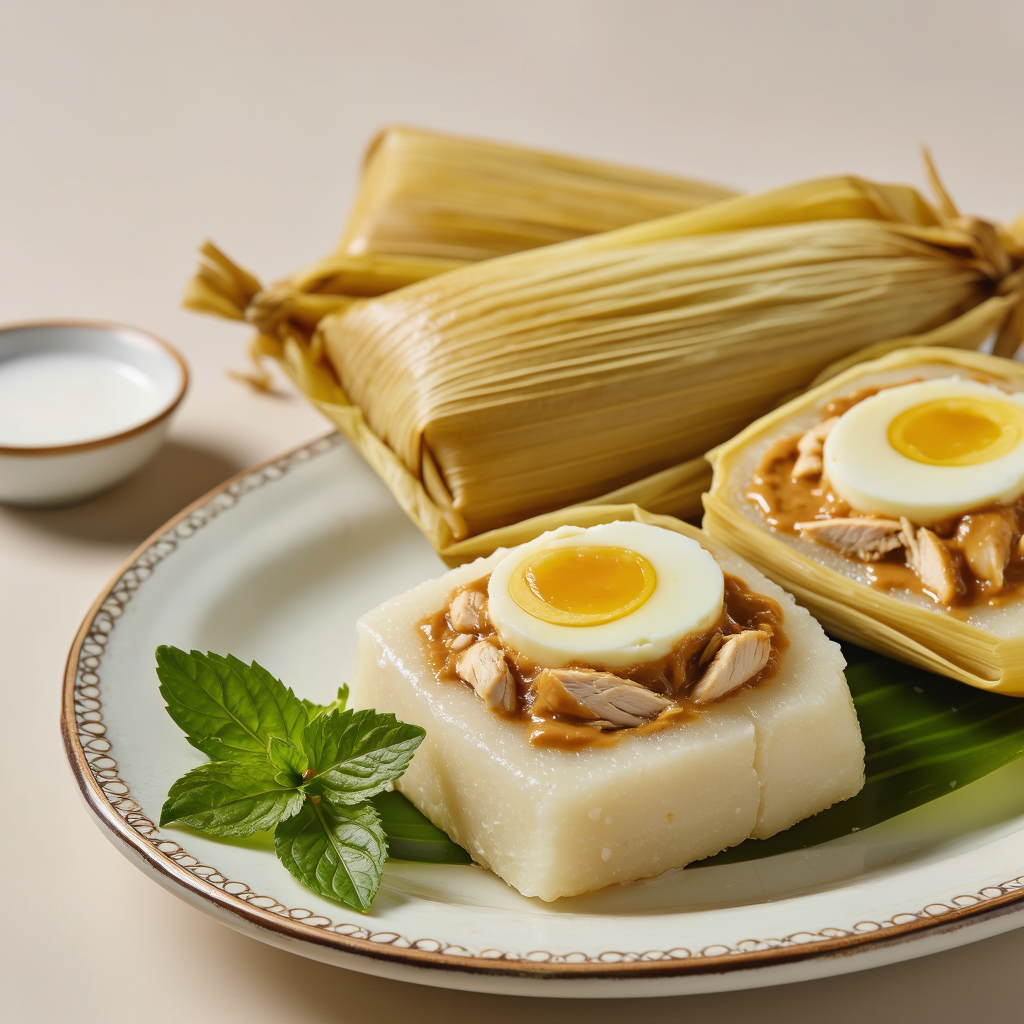
Filipino Tamales
Filipino Tamales are a traditional Kampangan delicacy that is served for breakfast or snacks. Made of rice flour, coconut milk, and peanut butter, they're hearty and tasty, topped with chicken and eggs and steamed to perfection.
Instructions
- In a saucepan on medium heat, add chicken and enough water to cover. Bring it to a boil. skimming off any foam on top. When broth has cleared, Season it with salt and pepper until it suits your preference.
- Turn down the heat and cover it, and let it simmer gently for about 15 to 20 minutes or until chicken is cooked through. Drain chicken, reserving about 1 cup of the broth. Allow chicken to cool to touch and then flake.
- Put large pan - medium heat and warm up some oil. Add onions and garlic and Cook it until softened.
- Drop in coconut milk and broth and bring to a gentle boil.
- Slowly add rice flour, whisking vigorously to prevent lumps. Cook, stirring them around, for about 3 to 5 minutes or until it's smooth and resembling a thick paste.
- Dissolve annatto powder in 1 tablespoon of water.
- Separate ⅔ of the mixture into one bowl and the remaining ⅓ to another bowl. To ⅓ of the mixture, add the dissolved annatto and the peanut butter. Stir until everything is mixed in and evenly colored.
- Wash banana leaves and with a paper towel, wipe down any grit or dirt. Briefly pass through gas flames or soak for a few minutes in hot water until softened and more pliable. Set it aside.
- Scoop about ⅓ cup plain mixture on banana leaf and spread to about 3-inches wide.
- Scoop about 1 to 1 ½ tablespoons of the colored mixture onto the plain mixture and spread across the top.
- Arrange the pieces of flaked chicken, ham, sliced hard boiled eggs on top of the colored mixture. Fold banana leaves over the tamale mixture to fully enclose and tie with kitchen twine to secure.
- Arrange prepared tamales on steamer basket and steam for about 20 to 30 minutes or until cooked. Alternatively, arrange tamales in a pot and add enough water to cover. on medium heat, boil for about 20 to 30 minutes.
- Carefully remove tamales from heat and let stand for 1 or 2 minutes to set a little. May be served hot or cold.
Kitchen Tools We Recommend
Cook Filipino Tamales the easy way with the right tools. Shop our favorite kitchen essentials on Amazon — from reliable pots and pans to measuring tools that make Filipino cooking simpler.
🔥 Trending on Amazon right now — these products are selling fast. Check out what's climbing the charts.
As an Amazon Associate, I earn from qualifying purchases.
Pro Tips & Troubleshooting
- Filipino dishes are built on balance — taste your sauce before serving and add a pinch of sugar or a splash of vinegar if something feels off.
- Let meats rest after cooking so the juices redistribute for a more tender result.
- If a recipe calls for fresh produce, it matters — canned or frozen substitutes change the texture and brightness of the dish.
Cooking Tips
Let pork rest for 5–10 minutes after cooking before slicing. This redistributes juices so every bite stays moist.
Substitutions
Short on time? A pressure cooker (Instant Pot) can reduce cooking time by roughly half for most braised and stewed Filipino dishes. Reduce liquid slightly since less evaporates.
Storage & Reheating
Reheat on the stovetop over medium-low heat, adding a splash of water or broth if the sauce has thickened during storage. Microwave in 30-second bursts, stirring between each.
Comments (0)
Leave a comment