Pro Tips
Prep all ingredients before you start cooking — having everything measured, chopped, and ready makes the cooking process smooth and enjoyable.
Taste as you go and adjust seasoning gradually. It's easier to add more than to fix an over-salted dish.
Cooking Tips
For the most tender results, cook low and slow — a gentle simmer (not a vigorous boil) breaks down connective tissue without drying out the meat. Taste and adjust seasoning toward the end of cooking. As liquids reduce, flavors concentrate, so what tastes balanced early may become too salty later. Check liquid levels halfway through cooking and add hot water or broth if needed. Long-cooked dishes can dry out or burn if left unattended.
Ingredient Substitutions
No coconut milk? For a richer alternative, blend canned coconut cream with water (1:1). For a lighter option, use evaporated milk with a splash of coconut extract. In a pinch, heavy cream or full-fat milk can replace coconut milk — the texture will be similar though the flavor profile changes. Short on time? A pressure cooker (Instant Pot) can reduce cooking time by roughly half for most braised and stewed Filipino dishes. Reduce liquid slightly since less evaporates.
Storage & Reheating
Store in an airtight container in the refrigerator for up to 3–4 days. The flavors often deepen overnight, making leftovers even more delicious. Reheat on the stovetop over medium-low heat, adding a splash of water or broth if the sauce has thickened during storage. Microwave in 30-second bursts, stirring between each.
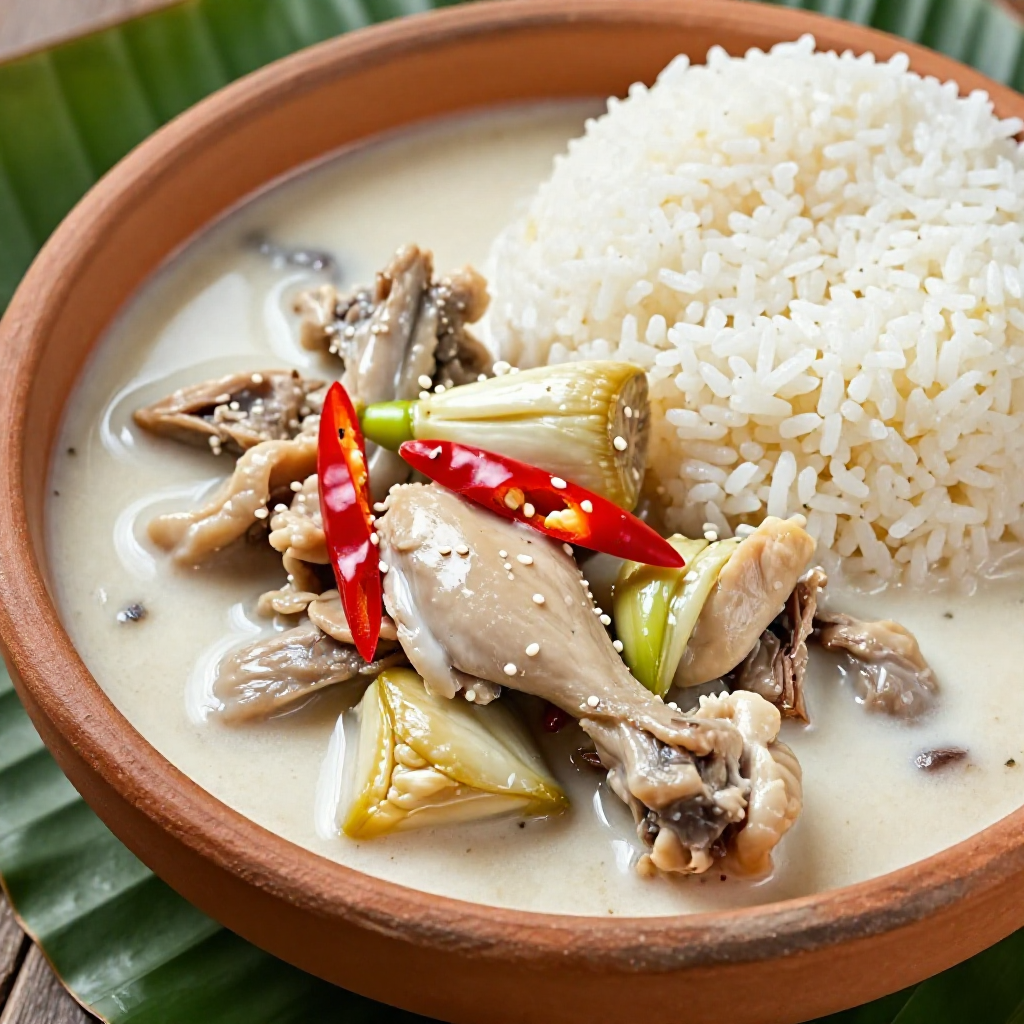
Dinaraongan
Dinaraongan is a quintessential Bicolano stew featuring tender chicken and banana blossoms slowly simmered in rich coconut milk with a generous amount of siling labuyo for heat. The banana blossom absorbs the creamy, spicy coconut broth beautifully, creating a dish that balances bold spice with deep, nutty sweetness. This hearty comfort food is a staple in Bicolano households and pairs wonderfully with steamed rice.
Instructions
- Prepare the banana blossom by peeling off the outer layers until you reach the tender inner core. Slice the core thinly and soak in vinegar water for 15 minutes to prevent browning, then drain and squeeze out excess moisture.
- Cut the chicken into serving-sized pieces. In a separate bowl, combine the chicken with fish sauce and half the minced garlic for a light marinade.
- In a heavy-bottomed pot or kaldero, heat vegetable oil over medium heat. Sauté the remaining garlic and sliced onion until fragrant and translucent, about 3 minutes.
- Add the shrimp paste and stir-fry for 1 minute until the raw smell dissipates and the mixture turns golden.
- Add the marinated chicken pieces and sear on medium-high heat for 5 minutes, turning once, until lightly browned on all sides.
- Pour in the coconut milk and water. Slice the siling labuyo lengthwise — this releases more heat than cutting them crosswise. Add to the pot along with salt.
- Bring to a gentle boil, then reduce heat to medium-low and simmer uncovered for 25 minutes, stirring occasionally.
- Add the prepared banana blossom and continue simmering for another 20 to 30 minutes until the chicken is tender and the banana blossom has absorbed the rich, spicy coconut sauce. The sauce should be thick and creamy.
- Taste and adjust seasoning. If you prefer a thicker sauce, simmer a few minutes longer. Serve hot over a generous portion of steamed white rice.
Kitchen Tools We Recommend
Cook Dinaraongan the easy way with the right tools. Shop our favorite kitchen essentials on Amazon — from reliable pots and pans to measuring tools that make Filipino cooking simpler.
🔥 Trending on Amazon right now — these products are selling fast. Check out what's climbing the charts.
As an Amazon Associate, I earn from qualifying purchases.
Pro Tips & Troubleshooting
Taste as you go and adjust seasoning gradually. It's easier to add more than to fix an over-salted dish.
Cooking Tips
Taste and adjust seasoning toward the end of cooking. As liquids reduce, flavors concentrate, so what tastes balanced early may become too salty later.
Check liquid levels halfway through cooking and add hot water or broth if needed. Long-cooked dishes can dry out or burn if left unattended.
Substitutions
In a pinch, heavy cream or full-fat milk can replace coconut milk — the texture will be similar though the flavor profile changes.
Short on time? A pressure cooker (Instant Pot) can reduce cooking time by roughly half for most braised and stewed Filipino dishes. Reduce liquid slightly since less evaporates.
Storage & Reheating
Reheat on the stovetop over medium-low heat, adding a splash of water or broth if the sauce has thickened during storage. Microwave in 30-second bursts, stirring between each.
Comments (0)
Leave a comment