Pro Tips
**Chef's Tips & Troubleshooting:**
- Do not overcook the noodles — they will continue to soften when stir-fried in the pan.
- Cook vegetables briefly over high heat so they stay crisp-tender in the pancit.
- Baste chicken with butter or oil halfway through roasting to prevent the breast from drying out.
- For chicken soup, add the vegetables in the last 10 minutes so they stay firm and bright.
Cooking Tips
For maximum flavor, season the chicken at least 30 minutes before cooking — ideally overnight in the refrigerator. This allows the marinade to penetrate beyond the surface. Use a meat thermometer to check doneness: 165°F (74°C) at the thickest part of the breast, away from the bone.
Ingredient Substitutions
Chicken alternatives: Pork shoulder or boneless thigh meat can substitute for chicken in stews. For lighter fare, extra-firm tofu or seitan works in stir-fries and braises. Short on time? A pressure cooker (Instant Pot) can reduce cooking time by roughly half for most braised and stewed Filipino dishes. Reduce liquid slightly since less evaporates.
Storage & Reheating
Store in an airtight container in the refrigerator for up to 3–4 days. The flavors often deepen overnight, making leftovers even more delicious. Reheat on the stovetop over medium-low heat, adding a splash of water or broth if the sauce has thickened during storage. Microwave in 30-second bursts, stirring between each.
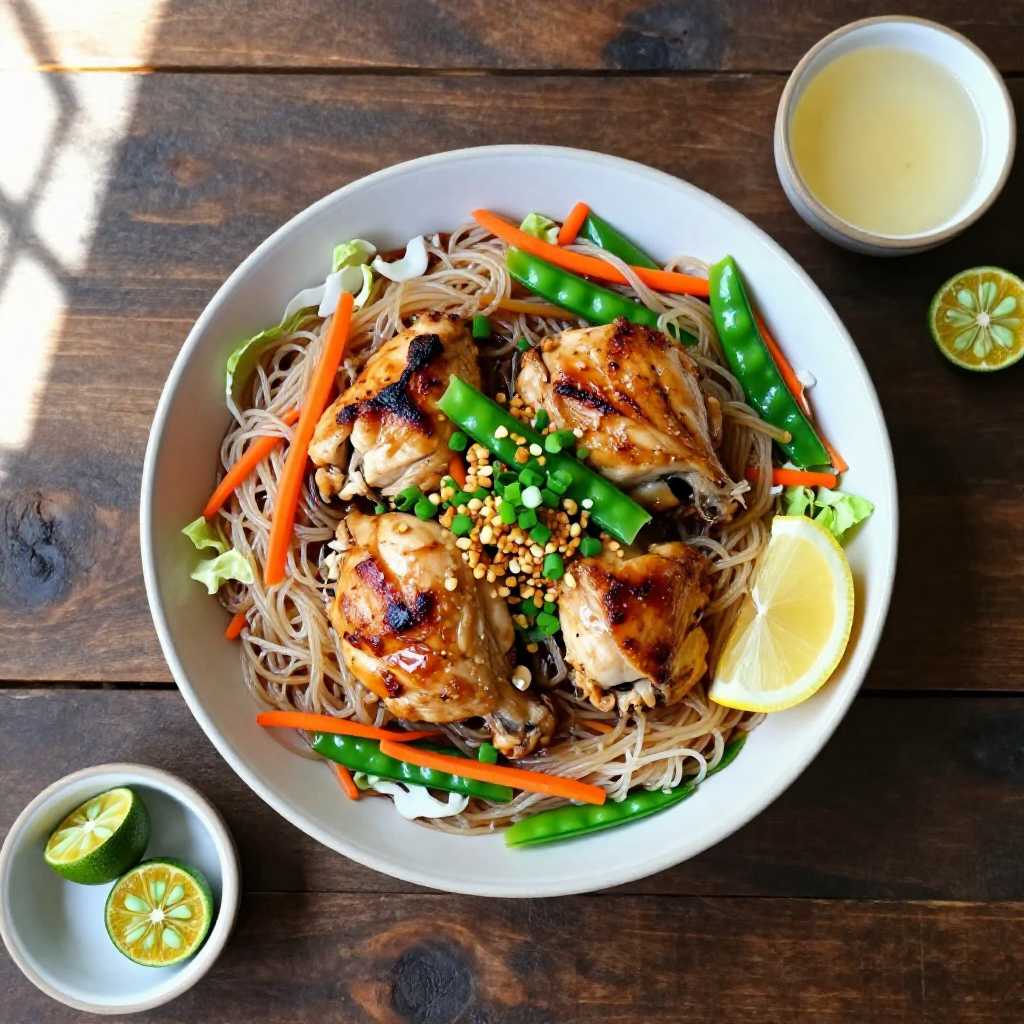
Chicken Pancit
Made with chicken, bihon noodles, sotanghon noodles and cabbage — a hearty Filipino dish that's simple to cook and satisfying to share.
Instructions
- Add 6 cups of water in a cooking pot. Let boil. Put-in the chicken and boil for 30 minutes.
- Remove the boiled chicken from the cooking pot. Let it cool down. Shred the meat and discard the bones. Set aside. Note: do not throw the water yet, we will use it later as chicken stock.
- Meanwhile, soak the sotanghon and bihon noodles in water for 10 minutes. Set aside. Note: do this by using a large mixing bowl and fill it with tap water.
- Heat a large pan. Pour-in 2 tablespoons cooking oil.
- Let the oil get hot then stir-fry the cabbage and carrots for 3 to 5 minutes. Remove from the pan and set aside.
- On the same pan, heat the remaining cooking oil. Once the oil becomes smoking hot, saute the onion, celery, and garlic.
- Add the ground black pepper and shredded chicken. Cook for 3 to 5 minutes.
- Pour-in soy sauce and 1 cup of chicken stock (this is the water that was used to boil the chicken). Stir and let boil. Cook for 2 minutes more.
- Add the soaked noodles. Toss the noodles until all the ingredients are well blended. If the noodles is somewhat dry, add a cup of chicken stock and continue to toss until the liquid is absorbed.
- Put-in the stir-fried cabbage and carrots. Toss.
- Transfer to a serving plate. Serve with lemon or calamansi.
Kitchen Tools We Recommend
Cook Chicken Pancit the easy way with the right tools. Shop our favorite kitchen essentials on Amazon — from reliable pots and pans to measuring tools that make Filipino cooking simpler.
🔥 Trending on Amazon right now — these products are selling fast. Check out what's climbing the charts.
As an Amazon Associate, I earn from qualifying purchases.
Pro Tips & Troubleshooting
- Do not overcook the noodles — they will continue to soften when stir-fried in the pan.
- Cook vegetables briefly over high heat so they stay crisp-tender in the pancit.
- Baste chicken with butter or oil halfway through roasting to prevent the breast from drying out.
- For chicken soup, add the vegetables in the last 10 minutes so they stay firm and bright.
Cooking Tips
Use a meat thermometer to check doneness: 165°F (74°C) at the thickest part of the breast, away from the bone.
Substitutions
Short on time? A pressure cooker (Instant Pot) can reduce cooking time by roughly half for most braised and stewed Filipino dishes. Reduce liquid slightly since less evaporates.
Storage & Reheating
Reheat on the stovetop over medium-low heat, adding a splash of water or broth if the sauce has thickened during storage. Microwave in 30-second bursts, stirring between each.
Comments (0)
Leave a comment