Pro Tips
**Chef's Tips & Troubleshooting:**
- Let meats rest after cooking so the juices redistribute for a more tender result.
- Filipino dishes are built on balance — taste your sauce before serving and add a pinch of sugar or a splash of vinegar if something feels off.
- If a recipe calls for fresh produce, it matters — canned or frozen substitutes change the texture and brightness of the dish.
Cooking Tips
Let the dessert cool completely before slicing or serving — many Filipino sweets set and develop their best texture as they rest. Use fresh coconut milk (gata) when available rather than canned. The natural sweetness and rich consistency make a noticeable difference.
Ingredient Substitutions
Short on time? A pressure cooker (Instant Pot) can reduce cooking time by roughly half for most braised and stewed Filipino dishes. Reduce liquid slightly since less evaporates.
Storage & Reheating
Store in an airtight container in the refrigerator for up to 3–4 days. The flavors often deepen overnight, making leftovers even more delicious. Store desserts in a sealed container at room temperature for up to 2 days, or refrigerate for up to a week. Let chilled desserts come to room temperature before serving for the best texture and flavor. Reheat on the stovetop over medium-low heat, adding a splash of water or broth if the sauce has thickened during storage. Microwave in 30-second bursts, stirring between each.
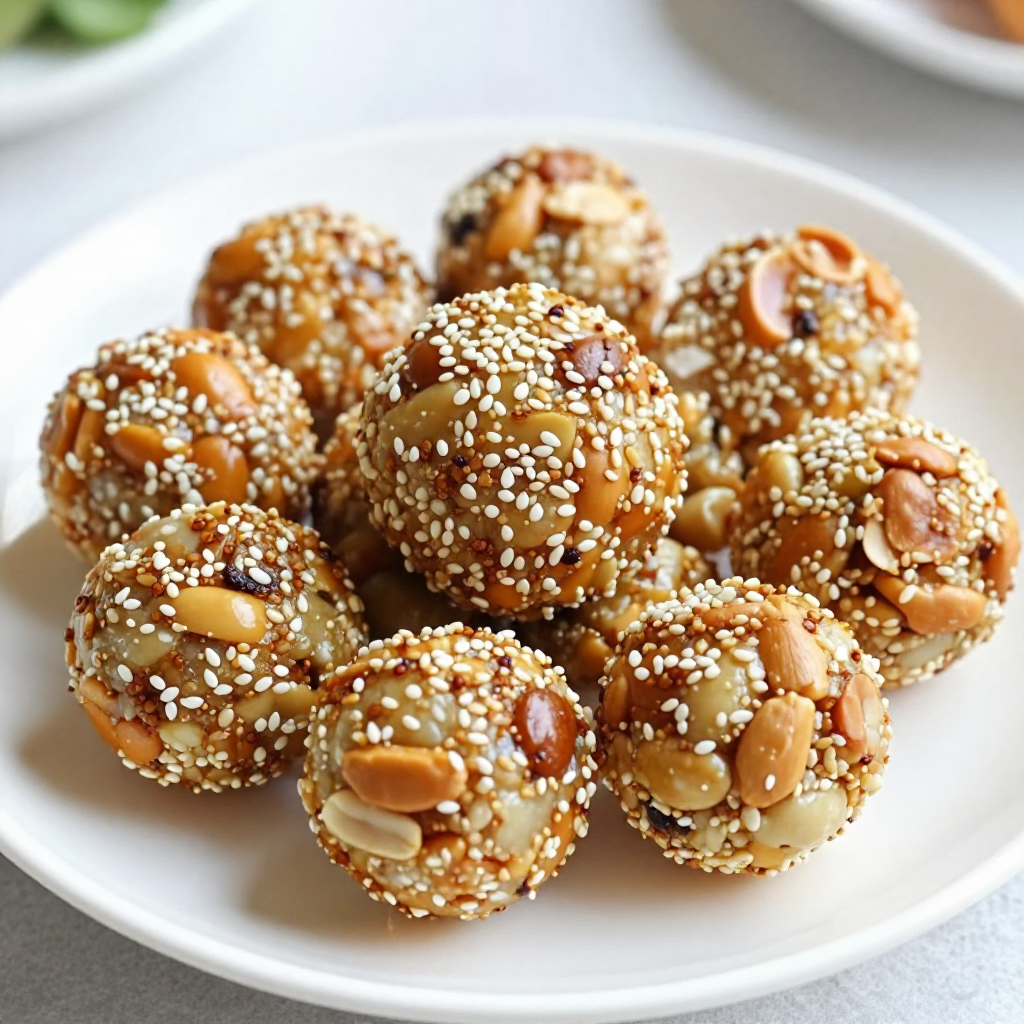
Sticky Rice Balls with Peanuts
Sticky Rice Balls with Peanuts are easy and fun to make and the perfect snack or dessert! Sweet, chewy, and generously coated with ground peanuts and toasted sesame seeds, they're seriously addictive!
Instructions
- In a pan on medium heat, toast sesame seeds, stirring frequently, for about 30 to 45 seconds or until golden at the edges and fragrant. Remove from heat and allow to cool.
- Mix toasted sesame seeds, peanuts, and sugar.
- In a bowl, place glutinous rice flour and slowly add water. Combine to form a soft, pliable dough. Knead dough until no longer sticky.
- Portion about 1 teaspoonful and between palm of hands, roll into 1-inch balls. Repeat with remaining dough. While working, cover the formed balls with a damp cloth to prevent from drying out.
- In a pot on medium heat, bring about 4 to 5 inches deep of water to a boil. Add balls and cook for about 2 to 3 minutes or until they float to the top. Do not overcrowd the pot, cook in batches as needed.
- Remove rice balls from the pot using a slotted spoon, shaking off excess liquid. using slotted spoon
- Roll balls in the peanut mixture, pressing down peanuts to fully coat.
- I use 1 cup of water to 2 cups of flour ratio which I find yields the chewy texture I like. The mixture will look dry at first but keep on mixing with your hands until it gathers into a smooth, soft, and pliable dough.
- Once the balls rise to the surface, they're done. Use a slotted spoon to remove them from the water right away to keep from over-cooking and Drain it well to prevent from wetting the peanut coating.
- Let them cool just enough to touch and begin immediately to roll in the ground peanuts as they'll coat better when still warm.
- Nutritional info calculated at 2 pieces per serving.
Kitchen Tools We Recommend
Cook Sticky Rice Balls with Peanuts the easy way with the right tools. Shop our favorite kitchen essentials on Amazon — from reliable pots and pans to measuring tools that make Filipino cooking simpler.
🔥 Trending on Amazon right now — these products are selling fast. Check out what's climbing the charts.
As an Amazon Associate, I earn from qualifying purchases.
Pro Tips & Troubleshooting
- Let meats rest after cooking so the juices redistribute for a more tender result.
- Filipino dishes are built on balance — taste your sauce before serving and add a pinch of sugar or a splash of vinegar if something feels off.
- If a recipe calls for fresh produce, it matters — canned or frozen substitutes change the texture and brightness of the dish.
Cooking Tips
Use fresh coconut milk (gata) when available rather than canned. The natural sweetness and rich consistency make a noticeable difference.
Substitutions
Storage & Reheating
Store desserts in a sealed container at room temperature for up to 2 days, or refrigerate for up to a week. Let chilled desserts come to room temperature before serving for the best texture and flavor.
Reheat on the stovetop over medium-low heat, adding a splash of water or broth if the sauce has thickened during storage. Microwave in 30-second bursts, stirring between each.

Comments (0)
Leave a comment