Pro Tips
**Chef's Tips & Troubleshooting:**
- Don't open the oven door during the first half of baking — the temperature drop can cause cakes to collapse.
- Bring butter and eggs to room temperature before creaming — they incorporate air better for a lighter texture.
- Preheat the oven fully before putting anything in — a cold oven gives dense, flat results.
Cooking Tips
For maximum flavor, season the chicken at least 30 minutes before cooking — ideally overnight in the refrigerator. This allows the marinade to penetrate beyond the surface. Use a meat thermometer to check doneness: 165°F (74°C) at the thickest part of the breast, away from the bone.
Ingredient Substitutions
Chicken alternatives: Pork shoulder or boneless thigh meat can substitute for chicken in stews. For lighter fare, extra-firm tofu or seitan works in stir-fries and braises. Short on time? A pressure cooker (Instant Pot) can reduce cooking time by roughly half for most braised and stewed Filipino dishes. Reduce liquid slightly since less evaporates.
Storage & Reheating
Store in an airtight container in the refrigerator for up to 3–4 days. The flavors often deepen overnight, making leftovers even more delicious. Reheat on the stovetop over medium-low heat, adding a splash of water or broth if the sauce has thickened during storage. Microwave in 30-second bursts, stirring between each.
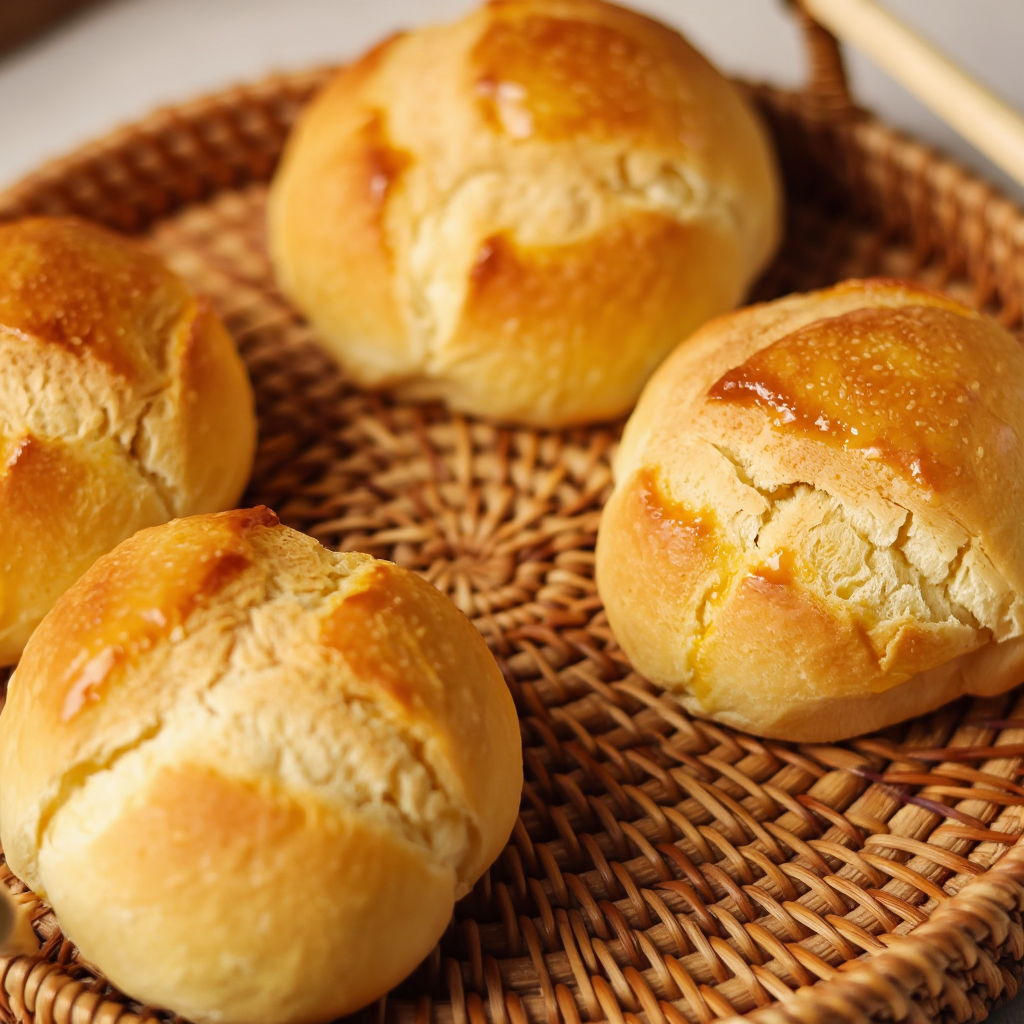
Monay
Love the aroma and taste of freshly baked bread? Make this panaderia favorite at home! Monay is a slightly sweet, hearty bread roll perfect for breakfast or merienda. Delicious with butter, jam, or your favorite spread!
Instructions
- In a big bowl, add the warm water. Sprinkle the yeast and about one teaspoon of the sugar. Let the mixture sit for about 5 minutes or until thick and foamy.
- Drop in the egg, butter, warm milk, dry milk powder, the remaining sugar, and salt. Using a wooden spoon, stir until blended.
- Add flour and stir with a wooden spoon until a shaggy dough forms.
- Turn the dough over on a flat working surface and knead for about 10 to 15 minutes or until it's smooth and elastic, lightly dusting hands with flour as needed to keep the dough from sticking.
- Lightly oil a large bowl. Shape the dough into a ball and gently turn it over and gently swipe on the inside of the bowl to oil the top. Then flip and place in the bowl, oiled side up.
- Cover with a clean towel and let the dough rise for 1 hour or until double in size.
- Gently deflate the dough by punching down. Turn over on the working surface and gather into a ball. Cut the dough into halves and cut each half into 6 portions.
- Using the palm of your hands, roll each dough into a smooth ball.
- Arrange the balls in a single layer on a parchment-lined baking sheet, leaving about 2 inches of space in between.
- Make a deep cut in each ball halfway, but not all the way through. using sharp knife or scissors
- Loosely cover with a clean towel and let rest for about 10 minutes.
- Meanwhile, preheat the oven to 350 F.
- In a bowl, make the egg wash by combining 1 egg and 1 tablespoon milk. Whisk until well-blended.
- Brush the tops of the buns with the egg wash and bake for 20 to 25 minutes, or until lightly golden on top.
- Ensure the water temperature for proofing is between 105 F to 115 F, as hot liquids will kill the yeast.
- The purpose of activating or proofing the yeast is to ensure it's alive and active before proceeding with the recipe. If bubbles don't appear on the surface of the mixture after about 6 to 10 minutes, it might be the liquid is too hot or the yeast is too old.
- Gently turn over the dough in a lightly greased bowl and swipe around the insides of the bowl to oil the top of the dough, so it doesn't dry out.
- Allow to rise in a warm, draft-free location. Too cool temperatures will retard yeast fermentation and increase the rise time. Too hot temperatures might kill the yeast and keep the dough from rising.
- For a uniform size, portion the dough by weight. Our recipe yields 12 pieces at about 70 grams each.
Kitchen Tools We Recommend
Cook Monay the easy way with the right tools. Shop our favorite kitchen essentials on Amazon — from reliable pots and pans to measuring tools that make Filipino cooking simpler.
🔥 Trending on Amazon right now — these products are selling fast. Check out what's climbing the charts.
As an Amazon Associate, I earn from qualifying purchases.
Pro Tips & Troubleshooting
- Don't open the oven door during the first half of baking — the temperature drop can cause cakes to collapse.
- Bring butter and eggs to room temperature before creaming — they incorporate air better for a lighter texture.
- Preheat the oven fully before putting anything in — a cold oven gives dense, flat results.
Cooking Tips
Use a meat thermometer to check doneness: 165°F (74°C) at the thickest part of the breast, away from the bone.
Substitutions
Short on time? A pressure cooker (Instant Pot) can reduce cooking time by roughly half for most braised and stewed Filipino dishes. Reduce liquid slightly since less evaporates.
Storage & Reheating
Reheat on the stovetop over medium-low heat, adding a splash of water or broth if the sauce has thickened during storage. Microwave in 30-second bursts, stirring between each.
Comments (0)
Leave a comment