Pro Tips
**Chef's Tips & Troubleshooting:**
- Simmer coconut milk gently — boiling it on high heat can cause it to separate and curdle.
- Stir coconut milk dishes occasionally to prevent a skin from forming on the surface.
- Let the dessert cool completely before slicing or serving for the best texture.
- Use a kitchen thermometer to maintain oil or oven temperature for consistent results.
Cooking Tips
Let the dessert cool completely before slicing or serving — many Filipino sweets set and develop their best texture as they rest. Use fresh coconut milk (gata) when available rather than canned. The natural sweetness and rich consistency make a noticeable difference.
Ingredient Substitutions
No coconut milk? For a richer alternative, blend canned coconut cream with water (1:1). For a lighter option, use evaporated milk with a splash of coconut extract. In a pinch, heavy cream or full-fat milk can replace coconut milk — the texture will be similar though the flavor profile changes. Short on time? A pressure cooker (Instant Pot) can reduce cooking time by roughly half for most braised and stewed Filipino dishes. Reduce liquid slightly since less evaporates.
Storage & Reheating
Store in an airtight container in the refrigerator for up to 3–4 days. The flavors often deepen overnight, making leftovers even more delicious. Store desserts in a sealed container at room temperature for up to 2 days, or refrigerate for up to a week. Let chilled desserts come to room temperature before serving for the best texture and flavor. Reheat on the stovetop over medium-low heat, adding a splash of water or broth if the sauce has thickened during storage. Microwave in 30-second bursts, stirring between each.
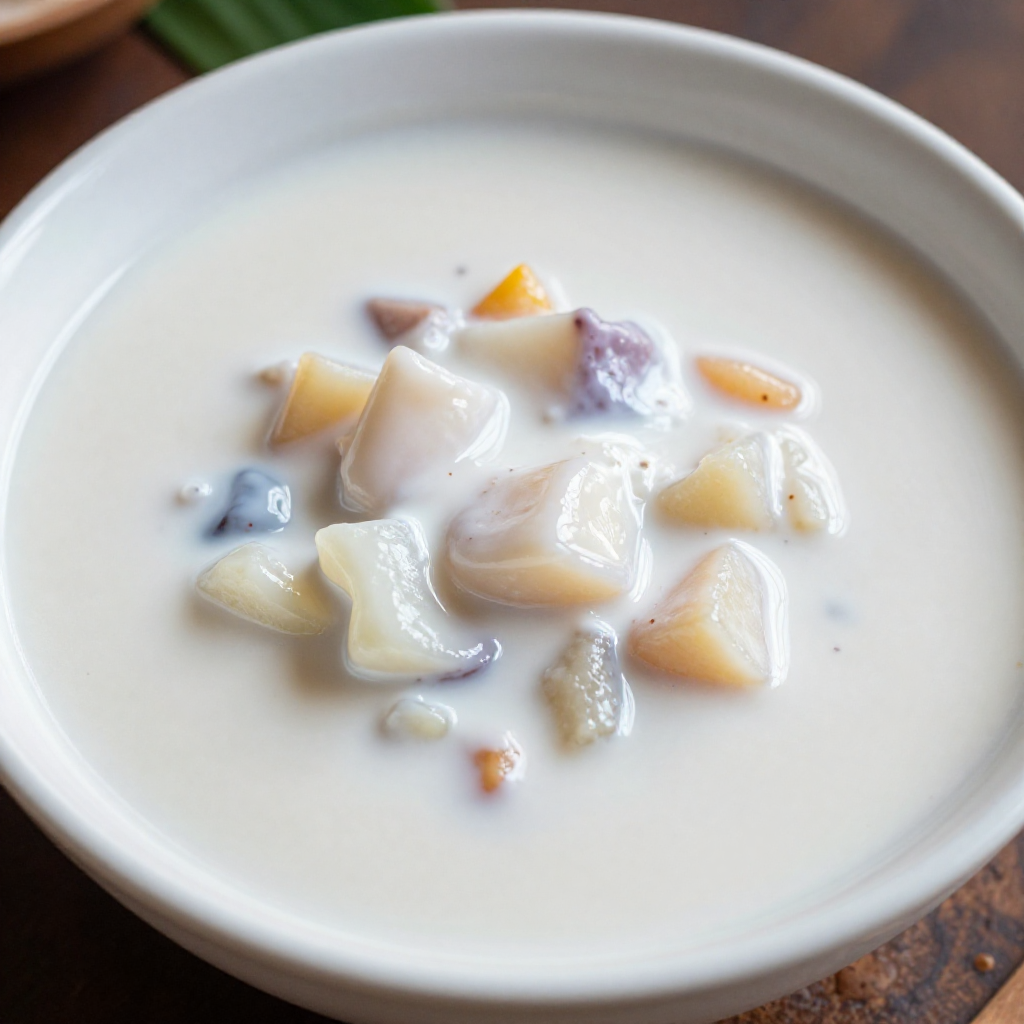
Ginataang Halo-halo (Binignit)
Halo-halo cooked in rich coconut milk — creamy, mild, and deeply satisfying. A staple Filipino cooking method from the Bicol region.
Instructions
- Pour water in a large cooking pot and apply heat. Let boil.
- Add 1 3/4 cups of coconut milk then wait until it re-boils.
- Put-in the sweet potatoes, purple yam, and taro roots and simmer for 8 minutes.
- Pour-in the remaining coconut milk, sugar, and glutinous rice balls then stir. Simmer for 7 minutes.
- Incorporate the plantains then cook for an additional 2 minutes.
- Put-in the jack fruit and cook for 2 minutes more.
- Slowly slide-in the cooked tapioca pearls then stir. Simmer for 1 minute.
- Turn off heat and transfer to a serving plate.
- Serve either hot or cold.
Kitchen Tools We Recommend
Cook Ginataang Halo-halo (Binignit) the easy way with the right tools. Shop our favorite kitchen essentials on Amazon — from reliable pots and pans to measuring tools that make Filipino cooking simpler.
🔥 Trending on Amazon right now — these products are selling fast. Check out what's climbing the charts.
As an Amazon Associate, I earn from qualifying purchases.
Pro Tips & Troubleshooting
- Simmer coconut milk gently — boiling it on high heat can cause it to separate and curdle.
- Stir coconut milk dishes occasionally to prevent a skin from forming on the surface.
- Let the dessert cool completely before slicing or serving for the best texture.
- Use a kitchen thermometer to maintain oil or oven temperature for consistent results.
Cooking Tips
Use fresh coconut milk (gata) when available rather than canned. The natural sweetness and rich consistency make a noticeable difference.
Substitutions
In a pinch, heavy cream or full-fat milk can replace coconut milk — the texture will be similar though the flavor profile changes.
Short on time? A pressure cooker (Instant Pot) can reduce cooking time by roughly half for most braised and stewed Filipino dishes. Reduce liquid slightly since less evaporates.
Storage & Reheating
Store desserts in a sealed container at room temperature for up to 2 days, or refrigerate for up to a week. Let chilled desserts come to room temperature before serving for the best texture and flavor.
Reheat on the stovetop over medium-low heat, adding a splash of water or broth if the sauce has thickened during storage. Microwave in 30-second bursts, stirring between each.
Comments (0)
Leave a comment