Pro Tips
**Chef's Tips & Troubleshooting:**
- Preheat the oven fully before putting anything in — a cold oven gives dense, flat results.
- Measure flour by spooning it into the cup, not scooping directly — scooping packs it down and adds up to 25% more flour.
- Bring butter and eggs to room temperature before creaming — they incorporate air better for a lighter texture.
Cooking Tips
Let the dessert cool completely before slicing or serving — many Filipino sweets set and develop their best texture as they rest. Use fresh coconut milk (gata) when available rather than canned. The natural sweetness and rich consistency make a noticeable difference.
Ingredient Substitutions
No coconut milk? For a richer alternative, blend canned coconut cream with water (1:1). For a lighter option, use evaporated milk with a splash of coconut extract. In a pinch, heavy cream or full-fat milk can replace coconut milk — the texture will be similar though the flavor profile changes. Short on time? A pressure cooker (Instant Pot) can reduce cooking time by roughly half for most braised and stewed Filipino dishes. Reduce liquid slightly since less evaporates.
Storage & Reheating
Store in an airtight container in the refrigerator for up to 3–4 days. The flavors often deepen overnight, making leftovers even more delicious. Store desserts in a sealed container at room temperature for up to 2 days, or refrigerate for up to a week. Let chilled desserts come to room temperature before serving for the best texture and flavor. Reheat on the stovetop over medium-low heat, adding a splash of water or broth if the sauce has thickened during storage. Microwave in 30-second bursts, stirring between each.
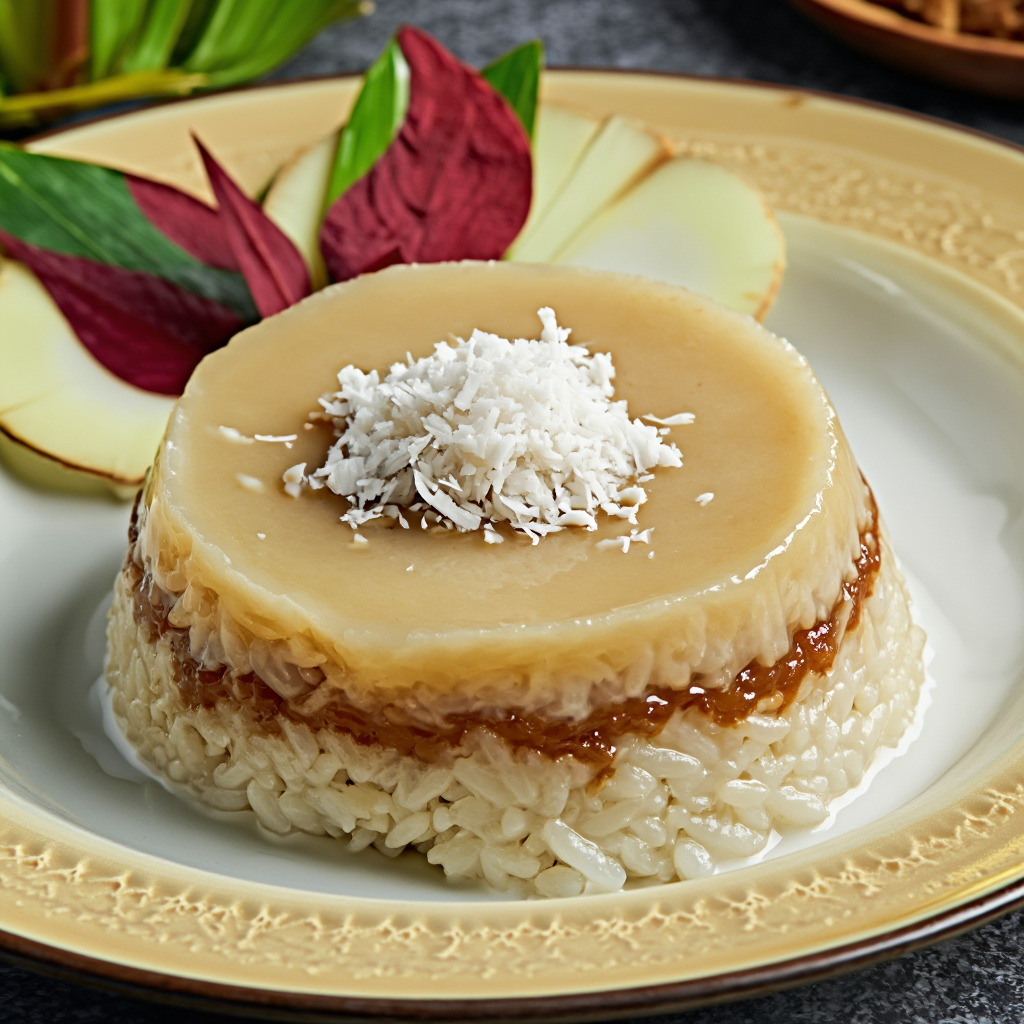
Bibingkang Malagkit
Bibingkang Malagkit made of glutinous rice, coconut milk, and brown sugar is perfectly sweet, creamy, and chewy. Topped with sweetened coconut spread, this Filipino rice cake is a delicious treat you'll love as a snack or dessert.
Instructions
- Brush bottom and sides of a 5 x 8 baking dish with coconut oil or melted butter. Set it aside.
- Rinse glutinous rice a few times or until water runs almost clear. Drain it well.
- In a deep, thick-bottomed pot or rice cooker, combine rice and water. Tie a pandan leaf into a knot and add it to the rice.
- On medium heat, Bring it to a boil. Lower heat, cover, and Cook it until liquid is absorbed.
- Allow to cool to touch and fluff with a fork to separate grains. Discard pandan leaf.
- In a wide non-stick skillet on medium heat, combine 3 cups coconut milk, white sugar, and salt. Stir until sugar is dissolved and Bring it to a simmer. Lower heat and Keep cooking until slightly reduced and thickened.
- Add rice, gently stirring to distribute evenly. Cook, stirring it now and then, for about 50 to 60 minutes or until the mixture is very thick and sticky, and pulls away from the sides of the pan.
- Meanwhile, In a non-stick pan on medium heat, combine the remaining 2 cups coconut milk and brown sugar. Cook, stirring occasionally, until very thick yet spreadable.
- Transfer to the sticky rice into the prepared baking dish and pat down with a lightly greased spatula to even out.
- Spoon coconut caramel topping over rice and spread across the surface to completely cover.
- Bake in a 350 F oven for about 20 to 30 minutes or until topping is caramelized and bubbly.
- Remove from oven and allow to cool completely before slicing.
- You can add a knot of pandan leaves when cooking the rice for aroma and flavor.
- To speed up making the sweetened coconut topping, swap the coconut milk with coconut cream if you have it on hand. This first extraction, or kakang gata is more concentrated and has less water content to reduce.
- Brush the inner bottom and sides of the baking pan with melted butter to keep the rice from sticking. You can also use coconut oil or line the pan with wilted banana leaves.
- The pan I use is 5 x 8-inch in size; if using a wider pan or you prefer a thicker caramel, you might need to double the amount of topping.
Kitchen Tools We Recommend
Cook Bibingkang Malagkit the easy way with the right tools. Shop our favorite kitchen essentials on Amazon — from reliable pots and pans to measuring tools that make Filipino cooking simpler.
🔥 Trending on Amazon right now — these products are selling fast. Check out what's climbing the charts.
As an Amazon Associate, I earn from qualifying purchases.
Pro Tips & Troubleshooting
- Preheat the oven fully before putting anything in — a cold oven gives dense, flat results.
- Measure flour by spooning it into the cup, not scooping directly — scooping packs it down and adds up to 25% more flour.
- Bring butter and eggs to room temperature before creaming — they incorporate air better for a lighter texture.
Cooking Tips
Use fresh coconut milk (gata) when available rather than canned. The natural sweetness and rich consistency make a noticeable difference.
Substitutions
In a pinch, heavy cream or full-fat milk can replace coconut milk — the texture will be similar though the flavor profile changes.
Short on time? A pressure cooker (Instant Pot) can reduce cooking time by roughly half for most braised and stewed Filipino dishes. Reduce liquid slightly since less evaporates.
Storage & Reheating
Store desserts in a sealed container at room temperature for up to 2 days, or refrigerate for up to a week. Let chilled desserts come to room temperature before serving for the best texture and flavor.
Reheat on the stovetop over medium-low heat, adding a splash of water or broth if the sauce has thickened during storage. Microwave in 30-second bursts, stirring between each.
Comments (0)
Leave a comment